
Built as a timeline
The pyramids, medieval Cairo, old Dubai and the new skyline follow each other in historical order.
Tour Operator · Egypt, Jordan, UAE, Turkey and Morocco
Cairo's ancient and living heritage, then the modern skylines of Dubai and Abu Dhabi
Cairo to Abu Dhabi · 9 days
Fly to DubaiDomestic flight
Fly to DubaiDomestic flight
This is a nine-day Egypt and UAE package that follows the story of architecture from the Giza pyramids to the skylines of the Gulf. You spend three nights in Cairo for Giza, the Grand Egyptian Museum and the historic quarters, three in Dubai for the creek, Al Fahidi and Burj Khalifa, and two in Abu Dhabi for the Sheikh Zayed Grand Mosque and Louvre Abu Dhabi. It suits travelers who enjoy history, buildings and photography and want three cities in one well-paced trip.
This itinerary reads three cities as one long story about building. It opens in Cairo, where the pyramids of Giza show the beginnings of monumental architecture and the medieval streets around Al-Muizz Street show a thousand years of mosques, madrasas and gates still in daily use.
From there you fly to Dubai, where the creek and the wind-tower houses of Al Fahidi reveal how people built for the Gulf climate before air conditioning, and Burj Khalifa and Palm Jumeirah show what the city builds now. A private road transfer then takes you to Abu Dhabi, where a settling-in day on the Corniche is followed by the Sheikh Zayed Grand Mosque and Louvre Abu Dhabi.
Three nights in Cairo, three in Dubai and two in Abu Dhabi keep hotel changes sensible. The trip ends in Abu Dhabi, and flights, hotels and ticketed visits are confirmed in your quote.
The pyramids, medieval Cairo, old Dubai and the new skyline follow each other in historical order.

A full day for Coptic or Islamic landmarks, Al-Muizz Street and Khan el-Khalili.
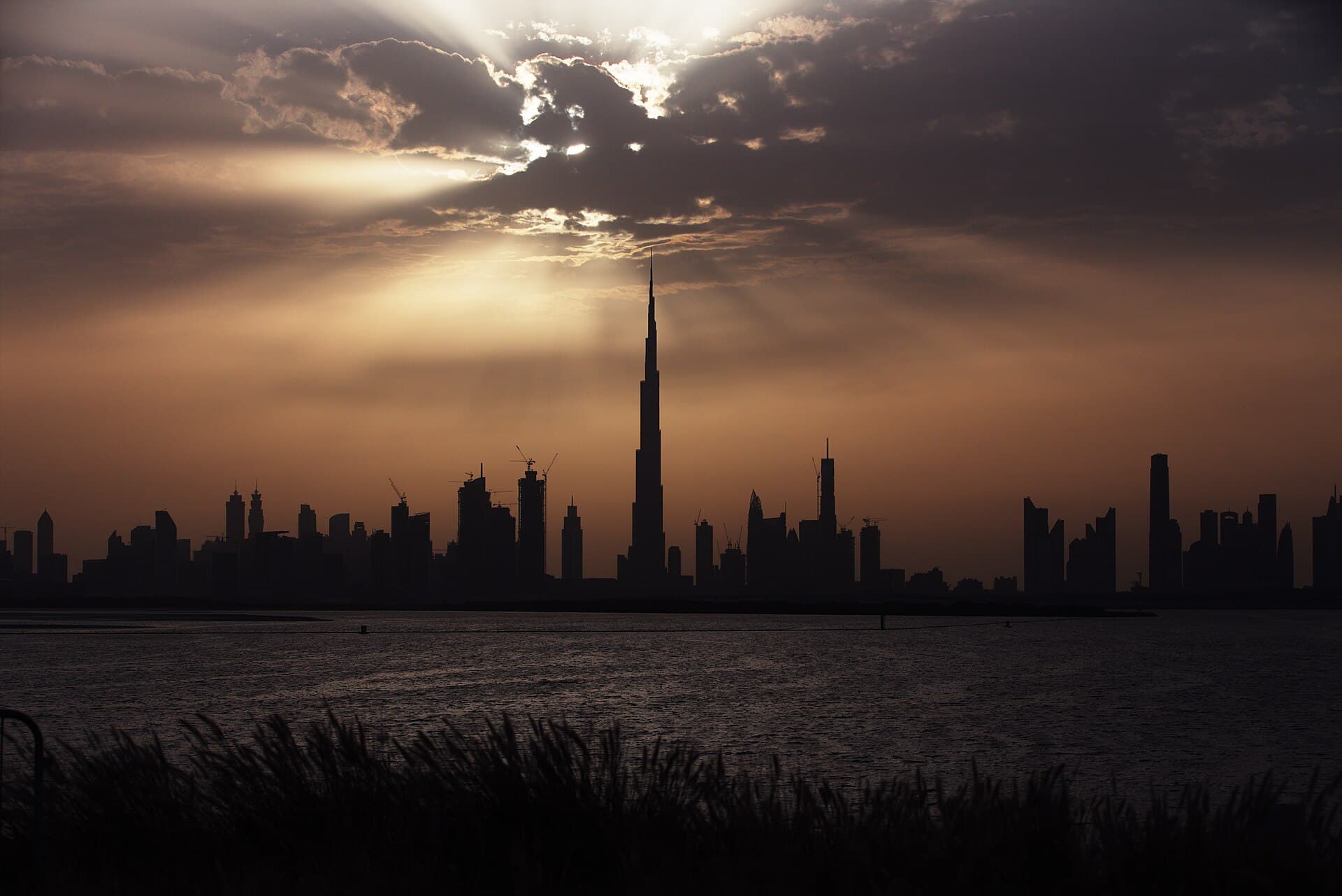
Wind-tower houses by the creek one day, Burj Khalifa and Palm Jumeirah the next.
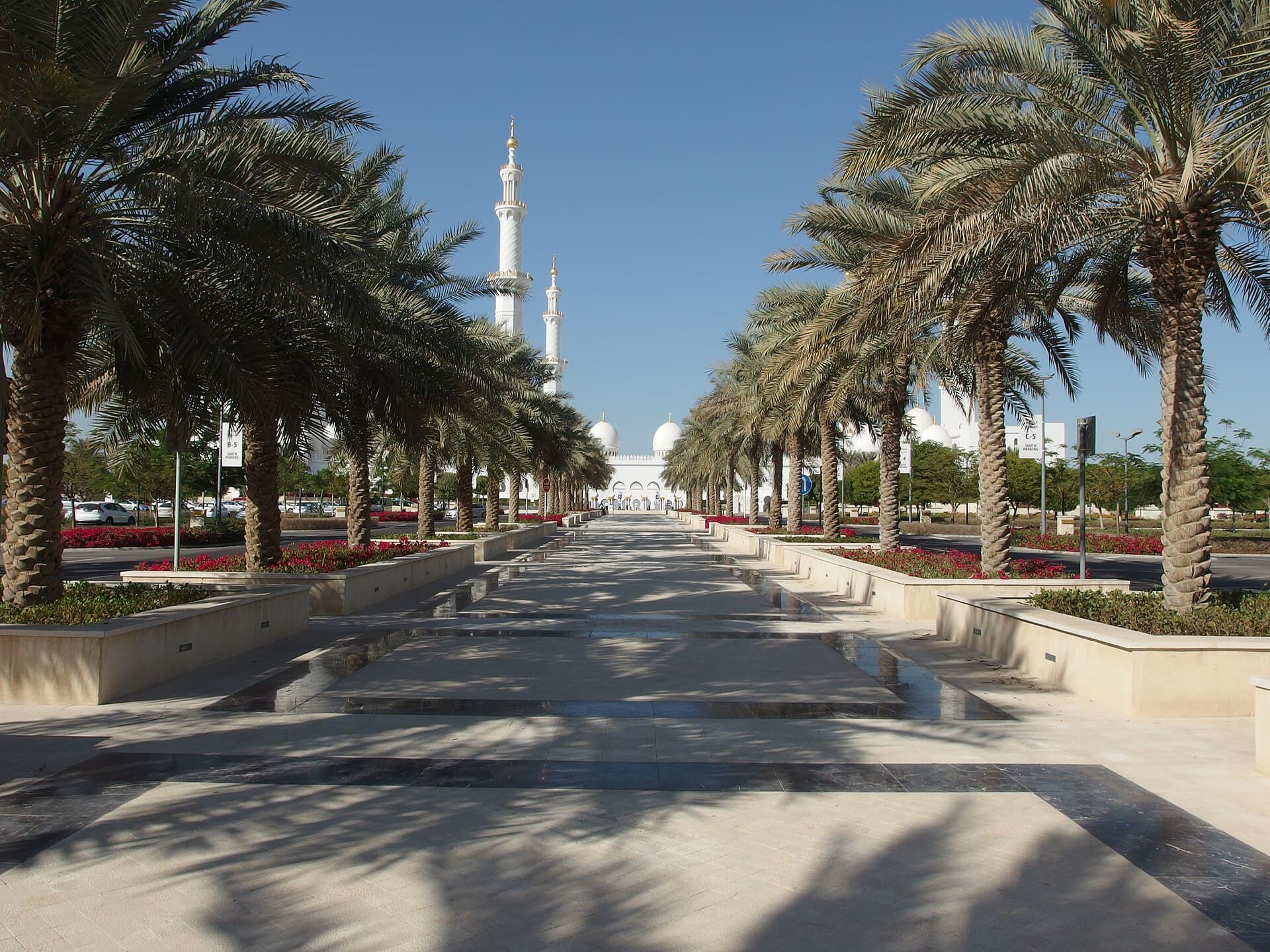
The Grand Mosque and the Louvre share a full, unhurried day after a settling-in day.

Your journey from ancient stone to modern glass begins at Cairo International Airport. A representative meets you after immigration and baggage collection and escorts you to a private car for the transfer to your hotel. On the drive in, notice how layered the city is: 19th-century facades, concrete apartment towers, the minarets of mosques built across a thousand years, and the elevated highways that stitch it all together. Cairo is the ideal place to start an itinerary about how people build.
The rest of the day is unscheduled so you can rest after your flight. If you arrive early, a gentle walk near the hotel or dinner with a view of the Nile makes a better beginning than squeezing a museum into a travel day. If your flight lands late, check in and sleep; tomorrow starts with the pyramids.
Your representative confirms the next morning's meeting time and how your guide will reach you. Meals are not included today, and you may find it useful to buy a local SIM card or some Egyptian pounds at the airport before you leave the terminal.
Today you meet the beginning of monumental architecture. On the Giza Plateau your guide explains the Great Pyramids not as isolated wonders but as part of a planned funerary landscape: valley temples at the edge of the cultivation, causeways climbing the slope, mortuary temples against the pyramid faces, and rows of stone tombs for the officials who served the kings. Walking between viewpoints, you can see how the builders used the natural rock, the alignment to the cardinal points and the sheer mass of quarried limestone.
The Great Sphinx shows another technique entirely: rather than being assembled from blocks, it was carved directly from an outcrop left behind by the quarrymen. Your guide points out the weathered layers of rock and the repairs of later centuries.
In the afternoon you move to the Grand Egyptian Museum, itself a striking piece of contemporary architecture, with a vast facade and a grand staircase lined with royal statues. Specific galleries, admission categories and any visit inside a pyramid depend on the ticketing plan confirmed in your quote. Meals are not included today.

Cairo's medieval core is one of the great open-air museums of Islamic architecture, and today you read it building by building. The morning moves between selected Coptic or Islamic landmarks, chosen according to opening times and your interests. Your guide might contrast the basilica plans and carved wooden screens of the old churches with the open courtyards and arcades of the great congregational mosques, explaining how each tradition shaped light, sound and movement for worship.
In the afternoon you walk the lanes around Al-Muizz Street, where Fatimid gates, Mamluk domes, madrasas and public fountains line a street that is still full of shops and workshops. Look up as well as ahead: carved stone, inscriptions and wooden mashrabiya screens tell you which dynasty built what. The walk ends among the alleys of Khan el-Khalili, where the bazaar has traded since the Middle Ages.
Time for tea and browsing is built into the day. Cover shoulders and knees for the religious sites, and bring a camera with a wide lens for narrow streets. Meals are not included, and this is your last full day in Egypt before the Gulf.


Today the story jumps from the medieval city to the 21st century. A transfer takes you to Cairo airport for your international flight to Dubai, usually around three and a half to four hours in the air. Keep your passport and any UAE entry paperwork handy, and allow time for check-in and security on departure.
A representative meets you after arrival and takes you to your hotel by private transfer. The rest of the day is free. From the car window you see the contrast that will shape the next few days: wide highways, glass towers and new districts laid out on what was open desert within living memory. It is a useful moment to compare what you have just seen in Cairo, where streets grew over a thousand years, with a city largely planned in a few decades.
Rest, swim if your hotel has a pool, or take an easy walk near the hotel after sunset, when the skyline lights up. Any observation deck, evening cruise or restaurant reservation tonight is optional unless your quote lists it. Meals are not included, and Dubai's clock runs ahead of Cairo's, so adjust your alarms.
Before the towers, Dubai built with coral stone, gypsum, palm wood and the wind. Today you explore that older architecture, starting beside Dubai Creek, the natural harbor that made the town a trading port. Wooden dhows still line the wharves, and abra water taxis cross between the two banks, giving you a low-level view of the waterfront that no tower can offer.
In the Al Fahidi Historical Neighborhood your guide shows how houses were designed for a hot, humid climate long before air conditioning. Tall wind towers, known locally as barjeel, caught breezes above the rooftops and channeled them down into the living rooms. Thick walls, shaded courtyards and narrow lanes kept the quarter cool, and many of the restored houses now hold museums, galleries and cafés.
Whether you cross the creek or follow its banks depends on the confirmed local plan. Take your time: the point of today is to understand the city beyond its skyscrapers, and the quarter rewards slow looking rather than a quick photo stop. Comfortable shoes and modest dress for cultural buildings are a good idea. Meals are not included today.
Today you see how Dubai answered its own past with glass and steel. Your exploration of the modern city centers on Burj Khalifa, whose stepped, Y-shaped plan is said to echo a desert flower and helps the tower cope with wind as it climbs to roughly 828 meters. Your guide explains how the district around it was planned as a single development, with a lake, promenades and lower blocks framing the tower.
Later you travel toward the coast for a viewpoint over Palm Jumeirah, an island built from reclaimed sand in the shape of a palm tree, with a protective crescent around its fronds. It is as much a feat of engineering as of architecture, and seeing it in person helps make sense of its scale.
An observation-deck ticket at Burj Khalifa is a separate, timed product and is included only if your quote lists it. The day's order follows confirmed reservations and traffic, and the plan favors a few well-paced stops over long queues. Photographers may want to return to the tower at dusk, when it is lit. This is your last night in Dubai, and meals are not included today.

Today a private road transfer carries you along the coast from Dubai to Abu Dhabi, the capital of the United Arab Emirates. The drive usually takes around one and a half to two hours depending on traffic, and the landscape between the two cities, a mix of desert, new suburbs and industrial zones, shows how quickly the country has grown.
Once you have checked in, take a first look at the Corniche, Abu Dhabi's long waterfront promenade, or enjoy another comfortable waterfront outing near your hotel. You will notice the change of pace immediately: Abu Dhabi feels greener, calmer and more spread out than Dubai, with wide boulevards and parks laid out along the shore. It is a pleasant place for an evening walk as the heat fades.
Today is about the transfer and settling into the capital. The Sheikh Zayed Grand Mosque has its own visitor dress and entry rules and deserves a separate, properly timed visit, so it is kept for tomorrow, along with the Louvre. Use the evening to rest, check that you have suitable clothing for the mosque, and enjoy the sea air. Meals are not included today.
The architectural journey ends with two buildings that could hardly be more different. You begin at the Sheikh Zayed Grand Mosque, one of the largest mosques in the world, built in white marble with dozens of domes, reflecting pools and courtyards inlaid with floral designs. Your visit respects prayer times and the mosque's dress code, which asks visitors to cover arms and legs and women to cover their hair. Your guide explains how craftspeople and materials from many countries came together in its decoration, from the vast carpet to the chandeliers.
Next you continue to Louvre Abu Dhabi, provided admission and opening times are confirmed for the day. Designed by the architect Jean Nouvel, the museum is a cluster of white galleries sheltered beneath a vast perforated dome, which scatters sunlight into what has been called a rain of light. Inside, the collections are arranged to show connections between civilizations, and you may well find objects from ancient Egypt that link back to Giza.
Allow time to sit, look and ask questions rather than treating either site as a hurried stop. Meals are not included, and tonight is your final night of the trip.
Your final morning in Abu Dhabi is kept free of sightseeing so you can leave without hurry. Check out at the agreed time, and a private transfer takes you to the airport for your departure. Please note that this itinerary ends in Abu Dhabi, so your onward flight should leave from Abu Dhabi rather than Dubai unless your quote arranges otherwise.
Before you travel, confirm your flight time, baggage allowance and any visa or exit requirements for your next destination. Extra hotel time, late check-out or an additional excursion is not included unless it appears in your confirmed booking, so if your flight leaves late in the day, mention it when you request your quote and we can suggest how to use the hours.
In nine days you have followed the story of building from the pyramids of Giza, through the domes and minarets of medieval Cairo and the wind towers of old Dubai, to Burj Khalifa, the Grand Mosque and the Louvre's floating dome. This trip puts a lot of architectural history side by side, and you leave with a clear sense of how each era answered the climate, faith and ambitions of its time. Meals are not included today.
Per person, two sharing. Prices are a starting point; your planner confirms the final price for your dates.
| Two sharing | $1,430 |
| Single room | $2,000 |
| Two sharing | $1,790 |
| Single room | $2,510 |
October to April is the comfortable window for both countries, with warm days for Giza and pleasant conditions in Dubai and Abu Dhabi. Summer heat in the Gulf makes outdoor sightseeing hard work.
Light clothing that covers shoulders and knees suits Cairo's mosques and churches. The Sheikh Zayed Grand Mosque has its own dress and entry rules, so pack a long, loose outfit for that day.
An active pace: expect full days on foot through historic sites, old quarters and modern city centers, with a flight from Cairo to Dubai and a road transfer to Abu Dhabi.
You fly from Cairo to Dubai on Day 4; check your quote to see whether that flight is part of your booking. A private road transfer takes you from Dubai to Abu Dhabi on Day 7, with that day kept for settling in.
Entry visas are not included. Entry rules depend on your passport and can change, so please check the official source before you travel.
Cards are widely accepted in both countries; carry some cash for tips and small purchases. Gratuities are not included, and observation decks, evening cruises and other ticketed extras are optional add-ons.
The private road transfer on Day 7 usually takes around one and a half to two hours, depending on traffic and where your hotels are. It is a door-to-door transfer, so you do not need to manage luggage on public transport, and the rest of that day is kept light so you arrive rested.
Visitors are asked to dress modestly: loose clothing that covers arms and legs, and a headscarf for women. Tight or see-through clothing is not accepted. The rules can be updated, so check the mosque's current visitor guidelines before your visit and pack one suitable outfit for Day 8; your guide will remind you the day before.
The Louvre is part of the Day 8 plan, but whether admission is included depends on your confirmed quote, and the visit goes ahead when opening times are confirmed for that day. If the museum is a priority for you, tell us when you request your quote so we can plan the timing around it.
Yes, that is its angle. The days run as a timeline: ancient stone at Giza, medieval Islamic and Coptic Cairo, the wind-tower houses of Al Fahidi, then modern Dubai, the Grand Mosque and the Louvre. Your guides can adjust the pace for photography, though tripods and drones are restricted at many sites.
You must meet the entry rules for Egypt and for the United Arab Emirates separately. Entry rules depend on your passport and can change, so please check the official source before you travel; visas are not included.
The itinerary ends in Abu Dhabi on Day 9, with a transfer to the departure airport. If you would rather fly home from Dubai, ask when you request your quote; the final transfer can usually be adjusted, though the timing has to allow for the road journey back.
October to April is the most comfortable period for walking in Cairo, Dubai and Abu Dhabi. Summer brings intense heat to all three cities, and high humidity in the Gulf, which makes the outdoor parts of the Al Fahidi and Corniche days tiring. The museums and the mosque interior are comfortable all year.


Photo credits: Burj Khalifa — imran shahabuddin / Wikimedia Commons (CC BY 2.0) · Sheikh Zayed Grand Mosque — Guilhem Vellut from Annecy, France / Wikimedia Commons (CC BY 2.0) · Dubai — CT Cooper / Wikimedia Commons (Public domain) · Abu Dhabi — Davide Mauro / Wikimedia Commons (CC BY-SA 4.0)
TALK TO A REAL LOCAL EXPERT
Book a free 30-minute consultation with one of our Egypt specialists. We’ll talk through your ideas, answer your questions and help you plan the perfect trip.
“We are here, plan your Egypt journey with people who know it best.”