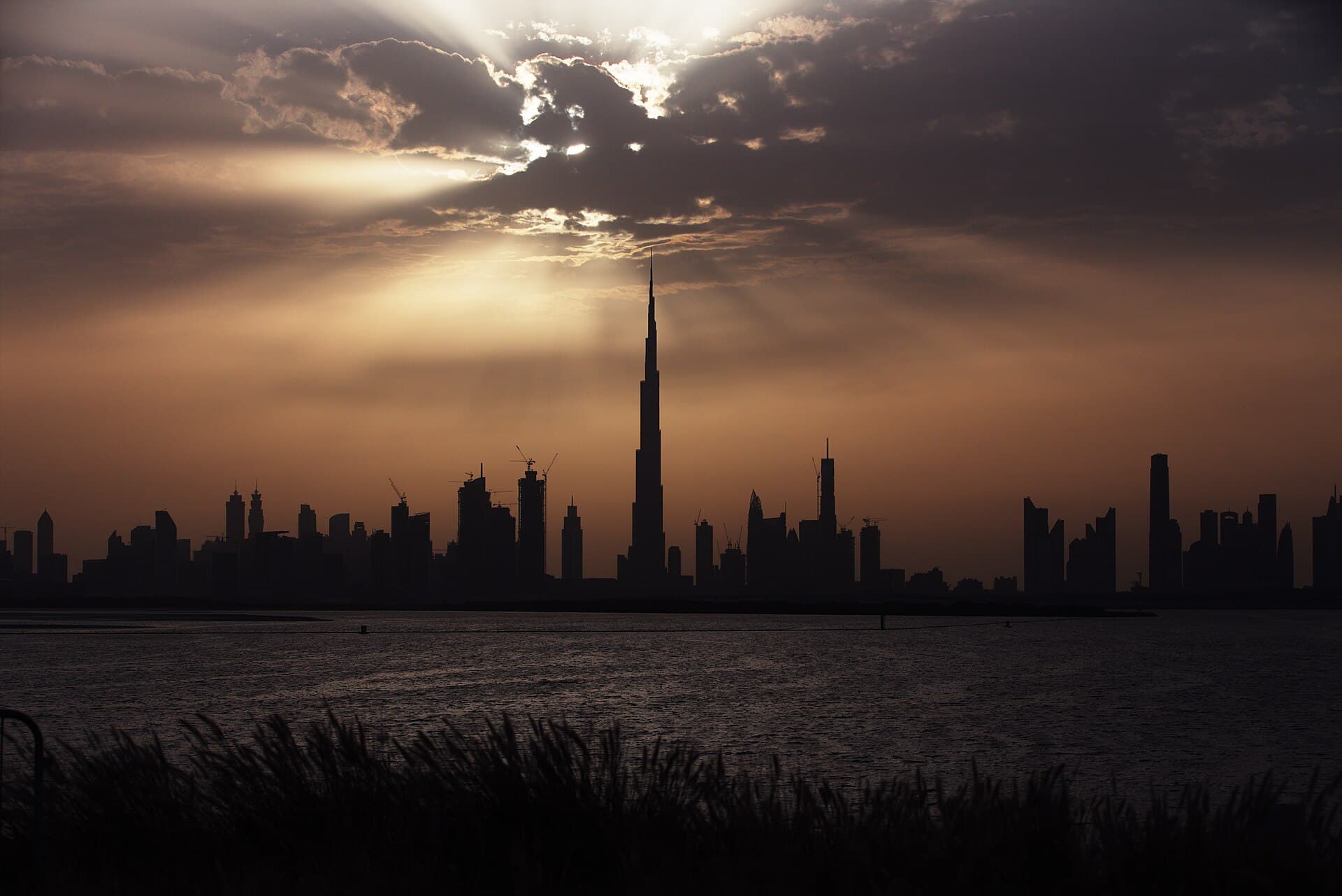
About Burj Khalifa
Burj Khalifa is the tallest building in the world, a slender tower of steel, glass and concrete rising 828 meters above Downtown Dubai. From its observation decks you look out across the city's towers and highways, the coastline of the Gulf and the desert stretching inland, a view that puts the scale of modern Dubai into perspective.
The tower is also the centerpiece of a whole district. It stands beside Dubai Mall, one of the largest shopping centers in the world, and above the lake where the Dubai Fountain performs. A visit is usually part of an afternoon or evening in Downtown rather than a single stop, combining the decks, the fountain and a meal with a view of the tower lit up.
For many travelers this is where Dubai's ambition becomes easy to grasp. The tower appears on the skyline from almost everywhere in the city, and standing first at its base, then near its top, helps you understand how quickly Dubai has grown from a trading town on its creek into a global city.
History in brief
Burj Khalifa was developed by Emaar Properties as the heart of a new Downtown district. Construction began in 2004 and the tower opened on January 4, 2010. It was designed by the Chicago office of Skidmore, Owings & Merrill, with Adrian Smith as the lead architect, and the same firm handled the structural engineering.
The project was originally called Burj Dubai, meaning Dubai Tower. At the opening ceremony it was renamed in honor of Sheikh Khalifa bin Zayed Al Nahyan, then president of the United Arab Emirates and ruler of Abu Dhabi. The building took the title of the world's tallest from Taipei 101 in Taiwan and has held it ever since.
The tower holds much more than viewing platforms. Its lower floors include the Armani Hotel, designed with input from Giorgio Armani. Above are private residences and offices, and a restaurant and lounge, At.mosphere, on level 122. The public observation levels sit higher still, with the very top given over to the spire and building systems.
Architecture and details worth noticing
The tower's plan is shaped like a three-lobed Y. The architects have described the form as drawing on the Hymenocallis, a desert flower, and on patterns found in Islamic architecture. Structurally, the three wings brace a hexagonal central core, an arrangement known as a buttressed core that gives the tower great stiffness against wind.
As you look up from the base, you will see the building step back in a spiral as it rises, with each setback reducing the floor area. Engineers designed this so that the wind meets a different shape at each level, which reduces the swirling forces that can make tall buildings sway. The tower is finished with a steel spire that houses communications equipment and adds considerably to its overall height.
The exterior is clad in reflective glass and metal panels designed to cope with intense sun and heat. At night, lights built into the facade turn the tower into a giant screen for light shows on national holidays and special occasions, and on many evenings shorter displays play out across the facade above the fountain lake.
What to see
- At the Top, levels 124 and 125: The main observation experience, with floor-to-ceiling glass and an outdoor terrace where you can feel the air at height. Telescopes and digital displays help you pick out landmarks and see the view at different times of day.
- At the Top SKY, level 148: A higher deck with fewer visitors, a lounge setting, refreshments and an outdoor terrace, sold as a premium ticket. It usually includes access to the main levels as well.
- The view itself: On clear days you can trace the coastline from Downtown toward Dubai Marina, see the fronds of the Palm Jumeirah in the distance, and follow the desert inland. Directly below, the fountain lake, the low-rise Old Town quarter of Downtown and the towers of Sheikh Zayed Road look like a model city.
- The exhibition on the way up: Before the elevators, displays and multimedia screens tell the story of the tower's design and construction, with images of the building rising floor by floor.
- The Dubai Fountain: Set in the lake at the tower's base, the fountain shoots jets of water high into the air in shows choreographed to music, with performances at intervals through the evening and a few times during the day. Watch from the waterfront promenade, the bridge to Souk Al Bahar or a restaurant terrace.
- The tower from below: Walk around the lake and along the boulevard after dark to see the building lit up. The bridge to Souk Al Bahar frames the tower and the fountain together, and the lakeside promenade is the classic place for a photo of the full height.
How to get there
Entry to the observation decks is inside Dubai Mall, on the lower ground level, and signs inside the mall direct you there. The Dubai Metro Red Line has a station called Burj Khalifa/Dubai Mall, connected to the mall by a long air-conditioned walkway. Taxis and ride-hailing cars drop off at the mall entrances, and many Downtown hotels are within walking distance. From Dubai International Airport the drive usually takes around 20 to 30 minutes, depending on traffic.
How long to spend and when to go
The visit itself takes about an hour to an hour and a half, including security, the walk in, the elevator ride and time on the deck. Plan another hour or two for the mall and the fountain if you want the full Downtown experience.
Sunset slots are the most popular, because you see the city in daylight, at dusk and lit up at night in one visit. They sell out early and often cost more. Early morning slots can be quieter and sometimes clearer. Dust and haze, especially on hot summer days, can soften the view, so if your schedule is flexible, check the forecast and book a day or two ahead rather than weeks in advance.
Dubai's cooler months, roughly from November to March, are the busiest, so book further ahead then. In summer, daytime temperatures regularly exceed 40 degrees Celsius, so keep outdoor time around the lake for the evening. Hours and ticket options change by season and during Ramadan, so check current hours, tickets and rules before you go.
Tips from our specialists
- Book timed tickets in advance. Walk-up prices are usually higher, and popular slots disappear quickly.
- Arrive at the entrance a little before your slot. The mall is very large, and finding the right level can take longer than you expect.
- Keep bags small. There is security screening before you go up.
- Clean your phone lens and turn off the flash to cut reflections from the glass. Holding the lens close to the window helps too.
- If heights make you uneasy, start on the indoor side of the main deck, where you can keep a step back from the glass and let yourself adjust.
- Reserve a table at a fountain-facing restaurant around the lake or in Souk Al Bahar if you want to watch the shows seated.
- For a more leisurely way to experience the height, consider a meal or afternoon tea at At.mosphere instead of, or as well as, the decks. Reservations and dress rules apply.
- Children enjoy the speed of the elevators, but the deck can be crowded at sunset, so families with small children may prefer a morning slot.
Nearby sights to combine
Dubai Mall itself holds the Dubai Aquarium and Underwater Zoo, whose large viewing panel you can see from the mall concourse without a ticket. Across the lake, Souk Al Bahar is a shopping and dining complex built in an Arabian souk style, with terraces facing the tower. The Dubai Opera, opened in 2016, is a short walk along the boulevard.
For contrast, take a taxi or the metro to Al Fahidi Historical Neighborhood and Dubai Creek, where you can cross by traditional abra boat to the spice and gold souks of Deira. Seeing the old trading town and the new skyline on the same day tells Dubai's story better than either alone. The Museum of the Future and the Dubai Frame are both a short drive from Downtown, and the beaches of Jumeirah are about 20 minutes away.
Frequently asked questions
Is At the Top SKY worth it?
It depends on your priorities. SKY is higher, less crowded and includes a lounge experience, while levels 124 and 125 already give a superb view. If you want a calmer visit at a busy time such as sunset, SKY can be worth the extra cost.
What is the best time to visit?
Late afternoon into sunset is the favorite, but it is also the busiest and most expensive time. Early morning is often quieter and can have clearer air. Night visits show the city lights at their best.
Is it comfortable for people afraid of heights?
The indoor decks are fully enclosed and feel very stable. The elevators are fast but smooth, and you can stay well back from the windows.
Can I see the Dubai Fountain from the top?
Yes, you can look down on it, but the shows look small from so high up. For the full effect, watch from the lakeside after your visit.
How tall is Burj Khalifa?
It is 828 meters high including its spire. It has been the world's tallest building since it opened in 2010.
Dubai combines easily with an Egypt trip, with frequent direct flights from Cairo, and an evening in Downtown is the simplest way to see the city at its most modern.