
Two cities, two hotels
Three nights in Cairo and three in Dubai mean you unpack only twice in seven days.
Tour Operator · Egypt, Jordan, UAE, Turkey and Morocco
Three nights in Cairo for Giza and the old city, then three nights in Dubai
Cairo to Dubai · 7 days
Fly to DubaiDomestic flight
This is a 7-day Egypt and Dubai package with three nights in Cairo and three in Dubai, linked by one international flight. In Cairo you spend a full day at the Giza pyramids, the Sphinx and the Grand Egyptian Museum and another in historic Cairo and Khan el-Khalili. In Dubai you see both faces of the city: the old creek and Al Fahidi quarter, then Burj Khalifa and the view toward Palm Jumeirah. It suits first-time visitors with a single week who want two contrasting cities and do not mind a busy schedule.
A week is enough to see two of the Middle East's great cities properly, as long as the plan does not try to do everything. This package gives Cairo three nights and Dubai three nights, joined by a single international flight, so you unpack only twice.
In Cairo you spend one full day at Giza and the Grand Egyptian Museum and a second in the older quarters, from Coptic and Islamic landmarks to the lanes of Al-Muizz Street and Khan el-Khalili. In Dubai the contrast is the point: one day by the creek and in the Al Fahidi Historical Neighborhood, where the city began as a trading port, and one day among the towers around Burj Khalifa with a view toward Palm Jumeirah.
The trip ends in Dubai. Flights, hotel categories and any ticketed extras, such as an observation deck, are set out in your personal quote.
Three nights in Cairo and three in Dubai mean you unpack only twice in seven days.

The pyramids, the Sphinx and the Grand Egyptian Museum share a single, well-paced day with your guide.

A full day for Coptic or Islamic landmarks, Al-Muizz Street and tea in Khan el-Khalili.
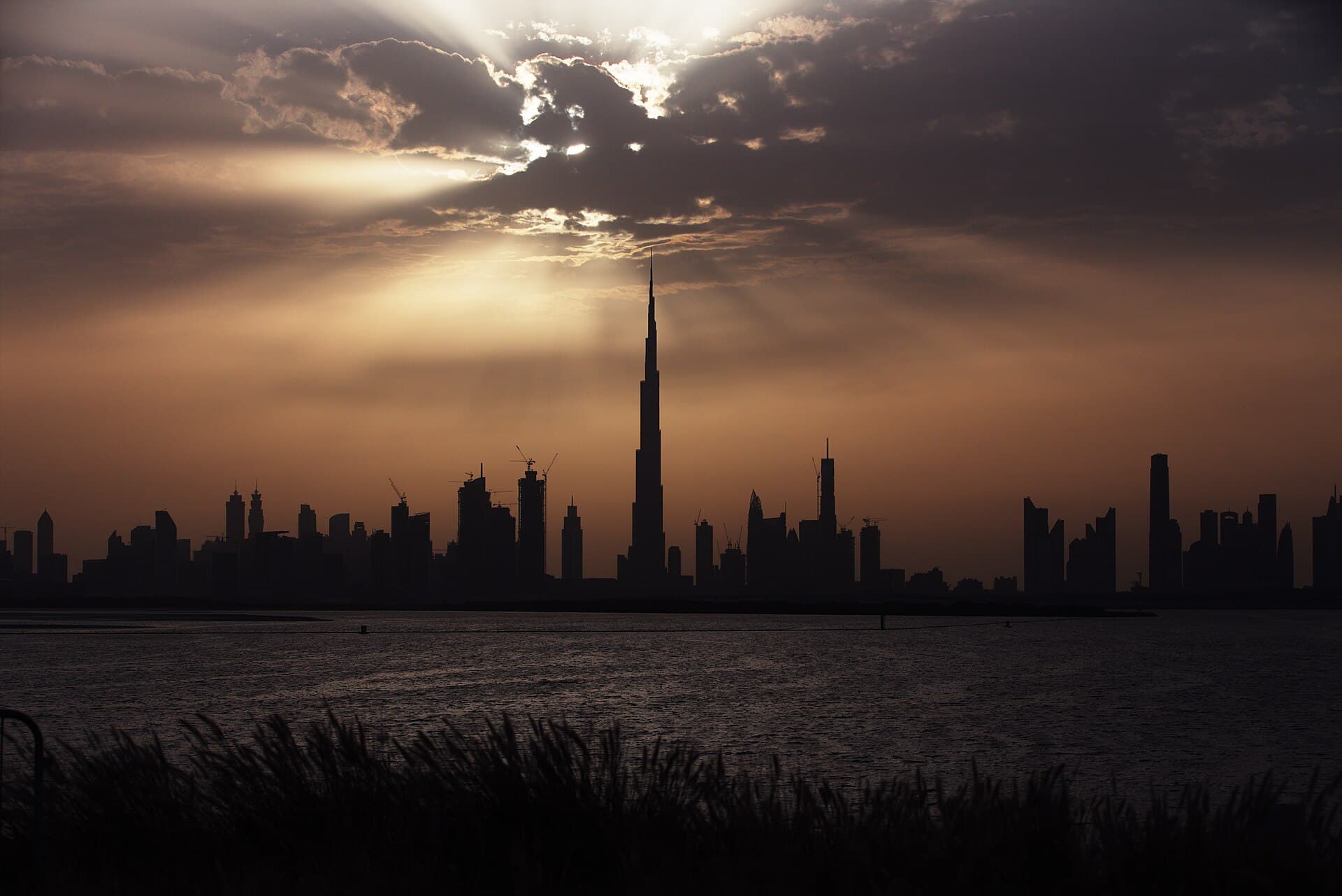
One day by the creek and in Al Fahidi, another among the towers around Burj Khalifa.
Your week starts at Cairo International Airport, where a representative meets you after immigration and baggage collection and walks you to a private car for the drive to your hotel. Depending on traffic and where you are staying, the transfer can take anywhere from half an hour to well over an hour, so sit back and watch the city arrive: flyovers, minarets, apartment blocks and, if your hotel is near the river, a first glimpse of the Nile.
Nothing else is planned today, and that is deliberate. A 7-day trip across two countries works best when the first evening is spent recovering rather than racing to a museum. If you land early, a short walk near the hotel or a quiet dinner overlooking the water is plenty. If you arrive late, simply check in and sleep.
Before you part ways, your representative confirms the meeting time for the Giza day and how your guide will contact you. Keep your phone charged and switched on. Meals are not included today, and any currency exchange or local SIM card is easiest to arrange at the airport or through your hotel.

This is the day most travelers picture when they think of Egypt, and it is planned so you do not have to rush it. You drive out to the Giza Plateau in the morning, while the light is still soft. Your guide explains how the Great Pyramids sit within a whole funerary landscape of temples, causeways and the tombs of officials, rather than standing alone in the sand, and you walk between viewpoints with time to ask questions and take photographs.
Next comes the Great Sphinx, carved from the bedrock of the plateau and guarding the approach to the pyramid of Khafre. From there it is a short drive to the Grand Egyptian Museum, where the afternoon is given over to the collections. Your guide picks a route through the galleries that suits your interests, whether that means the treasures of Tutankhamun, colossal royal statues or everyday objects from ancient homes.
Specific galleries, admission categories and any visit inside a pyramid depend on the ticketing plan confirmed in your quote; entering a pyramid is an optional extra. Wear comfortable shoes and bring a hat, as the plateau has very little shade. Meals are not included today.

After the monumental scale of Giza, today shows Cairo as a living city. The morning is spent in the older quarters, where your guide chooses a small group of Coptic or Islamic landmarks according to opening times and what interests you most. One version of the morning leans toward the churches of Coptic Cairo, where Christian communities have worshiped for many centuries; another focuses on the great mosques and madrasas of the medieval city.
In the afternoon you follow the lanes around Al-Muizz Street, one of the richest concentrations of medieval Islamic architecture anywhere, with carved stone facades, domes and minarets lining a street that is still busy with shops and workshops. The walk ends in Khan el-Khalili, the old bazaar, where brass lanterns, spices, textiles and silverware spill out of tiny storefronts.
Time for tea and browsing is part of the plan rather than an afterthought, so you can sit in a café and watch the city go about its day. Dress modestly, with shoulders and knees covered, for the religious sites, and carry small notes for purchases. This is your last full day in Egypt, and meals are not included.

Today you swap the Nile for the Gulf. A transfer takes you to Cairo airport for your international flight to Dubai, usually around three and a half to four hours in the air; your exact schedule appears in your travel documents. Allow time at the airport for check-in and security, and keep your passport and any UAE entry paperwork within easy reach.
On arrival in Dubai a representative meets you and accompanies you to your hotel by private transfer. The rest of the day is yours. After two busy days in Cairo, many travelers simply rest, swim if the hotel has a pool, or take a short walk to get their bearings. Dubai's skyline is especially striking after dark, and a stroll near your hotel is an easy first look at a city that feels very different from the one you left this morning.
Any observation deck, evening cruise or restaurant reservation tonight is an optional add-on unless your quote lists it. Meals are not included today. Dubai's clock runs ahead of Cairo's, so adjust your watch and alarms, and confirm tomorrow's pickup time with your representative before you settle in.
Today shows the first face of Dubai: the trading town that existed long before the towers. You begin beside Dubai Creek, the saltwater inlet that made the city's fortune as a harbor for pearling, fishing and trade. Wooden dhows still load cargo along the wharves, and small abra boats ferry people from one bank to the other, a short crossing that has changed little in spirit for generations.
Your guide then leads you into the Al Fahidi Historical Neighborhood, a quarter of restored coral-stone and gypsum houses whose wind towers once caught the breeze and pushed it down into the rooms below. The narrow lanes now hold small museums, galleries, courtyard cafés and craft shops, and they reward slow walking rather than a quick photo stop.
Whether you cross the creek by abra or follow its banks depends on the confirmed local plan. Either way, you come away understanding how a small port grew into a global city, and why the people of Dubai still talk about the creek as the place where it all began. Wear comfortable shoes, carry water, and dress modestly if you step into any heritage or cultural building. Meals are not included today.
The second face of Dubai is the one on the postcards. Today you explore a selected slice of the modern city, starting around Burj Khalifa, which rises to roughly 828 meters. Your guide explains how the tower and the district around it rose from open desert in a remarkably short time, and you have time to walk the plazas and waterfront promenades at its base.
Later you head toward the coast for a viewpoint over Palm Jumeirah, the palm-shaped island built out into the Gulf from reclaimed sand. Seen from the right spot, its trunk, fronds and protective crescent make sense of a project that is hard to picture on a map.
An observation-deck ticket at Burj Khalifa is a separate, timed product and is included only when your quote lists it; your guide can advise on how it fits the day if you choose to add one. The order of stops follows confirmed reservations and traffic, and the plan favors a few well-paced visits over hours spent in queues and transfers. Tonight is your last night of the trip, and meals are not included today.
Your last morning in Dubai is kept light so the trip ends calmly. Check out of your hotel at the agreed time, and your private transfer takes you to the airport for your onward flight. Allow a comfortable margin: Dubai's airport is large and busy, and check-in, security and the walk to the gate can take longer than expected.
Before you leave, check your flight time, baggage allowance and any visa or exit requirements for your next destination. If your flight is in the evening, ask about late check-out or luggage storage when you request your quote, since extra hotel time is not included unless it appears in your confirmed booking.
It is worth taking a moment to look back on the week. In six nights you have stood beneath the pyramids, walked the lanes of medieval Cairo, seen the dhows of Dubai Creek and one of the world's most ambitious skylines. That contrast, between a civilization measured in millennia and a city built within living memory, is exactly what this itinerary was designed to show. Meals are not included today, and no new sightseeing is scheduled, so the day is shaped around a comfortable departure.
Per person, two sharing. Prices are a starting point; your planner confirms the final price for your dates.
| Two sharing | $1,250 |
| Single room | $1,750 |
| Two sharing | $1,560 |
| Single room | $2,180 |
October to April is the most comfortable window for walking both cities. Cairo and Dubai are both very hot in summer, and the Giza Plateau has little shade at any time of year.
Light layers, a hat and comfortable walking shoes suit Giza and the lanes of Al-Muizz Street. Covered shoulders and knees are expected at the Coptic and Islamic landmarks visited on Day 3.
The pace is active, with a busy schedule of city walking in both countries. Day 4 is given over to international travel, with the rest of that day kept free to recover.
Day 4 is the international flight from Cairo to Dubai, where a representative meets you on arrival. International airfare is listed as an exclusion, so confirm how this leg is booked.
Entry visas for both Egypt and the United Arab Emirates are not included. Requirements differ by nationality for each country, so check both sets of rules well before you travel.
Gratuities, personal expenses and optional activities are not included. An observation-deck ticket at Burj Khalifa is a separate, timed product, so budget for it if you want to go up.
It is enough for a focused first visit. Three nights in each city give you two full sightseeing days in Cairo and two in Dubai, plus an arrival day, a flight day and a departure day. You will not see Luxor, Aswan or the other emirates, so if those matter to you, ask about our longer Egypt and UAE packages.
On Day 4 you take a scheduled international flight from Cairo to Dubai, usually around three and a half to four hours in the air. International airfare is listed as an exclusion, so your quote shows clearly whether this flight is booked for you or whether you arrange it yourself. A representative meets you on arrival in Dubai.
Yes, you need to meet the entry rules of each country separately. Entry rules depend on your passport and can change, so please check the official source before you travel; visas are not included.
Not by default. Day 6 includes time around Burj Khalifa and the modern city, but the observation deck is a separate timed ticket. If you want to go up, tell us when you request your quote and we will try to fit a time slot into the day; it is added only if you choose it.
Light, breathable clothes and comfortable walking shoes work in both cities. For the churches, mosques and bazaar in historic Cairo, and for heritage buildings in Dubai, cover shoulders and knees; women may want a light scarf. Dubai's malls and hotels are strongly air-conditioned, so a thin layer is useful indoors.
October to April is the most comfortable window, with warm days that suit walking at Giza and in Dubai's older quarters. From roughly May to September both cities are very hot, and the Gulf adds high humidity, so outdoor sightseeing is best kept to early mornings. If your dates fall during Ramadan, check how opening patterns may shift.
The day-by-day plan does not include set meals, which leaves you free to eat where you like in two very different food cities. Whether breakfast comes with your hotel rooms depends on the hotels and board basis in your quote. Your guide can recommend places for a koshari lunch in Cairo or an Emirati meal in Dubai.


Photo credits: Burj Khalifa — imran shahabuddin / Wikimedia Commons (CC BY 2.0) · Dubai — CT Cooper / Wikimedia Commons (Public domain)
TALK TO A REAL LOCAL EXPERT
Book a free 30-minute consultation with one of our Egypt specialists. We’ll talk through your ideas, answer your questions and help you plan the perfect trip.
“We are here, plan your Egypt journey with people who know it best.”