
A small boat on a big river
Four nights on a dahabiya with few cabins, quiet moorings and time to watch the Nile.
Tour Operator · Egypt, Jordan, UAE, Turkey and Morocco
Private guiding in Cairo, four nights on a dahabiya, then Dubai and Abu Dhabi
Cairo to Abu Dhabi · 14 days
Fly to LuxorDomestic flight
Fly to CairoDomestic flight
Fly to CairoDomestic flight
Fly to DubaiDomestic flight
This is a 14-day premium journey through Egypt and the United Arab Emirates. You spend three nights in Cairo with private guiding at Giza, the Grand Egyptian Museum and historic Cairo, four nights on a boutique dahabiya sailing from Luxor toward Aswan with visits on the West Bank, at Edfu and at Kom Ombo, a protected night in Cairo, then three nights in Dubai and two in Abu Dhabi. It suits couples and culture lovers who prefer small boats, private guides and an unhurried pace.
This 14-day journey is designed for travelers who value time, space and good guiding over a long list of stops. It begins with three nights in Cairo and private guiding at Giza, the Grand Egyptian Museum and the historic quarters around Al-Muizz Street and Khan el-Khalili.
You then fly to Luxor to board a boutique dahabiya, a traditional Nile sailing boat with a small number of cabins, for four nights on the river. Shore visits include the West Bank, the Temple of Horus at Edfu and Kom Ombo, with quiet hours of sailing between villages and fields. After disembarking in Aswan you fly to Cairo for a night that protects your onward connection, then continue to Dubai for three nights and Abu Dhabi for two, with the Sheikh Zayed Grand Mosque and Louvre Abu Dhabi to close the trip.
Your vessel, its sailing program and your hotels are confirmed in your personal quote.
Four nights on a dahabiya with few cabins, quiet moorings and time to watch the Nile.

Giza, the Grand Egyptian Museum and historic Cairo at your pace, with no group to follow.

A Cairo night after the sailing keeps any domestic delay away from your Dubai flight.
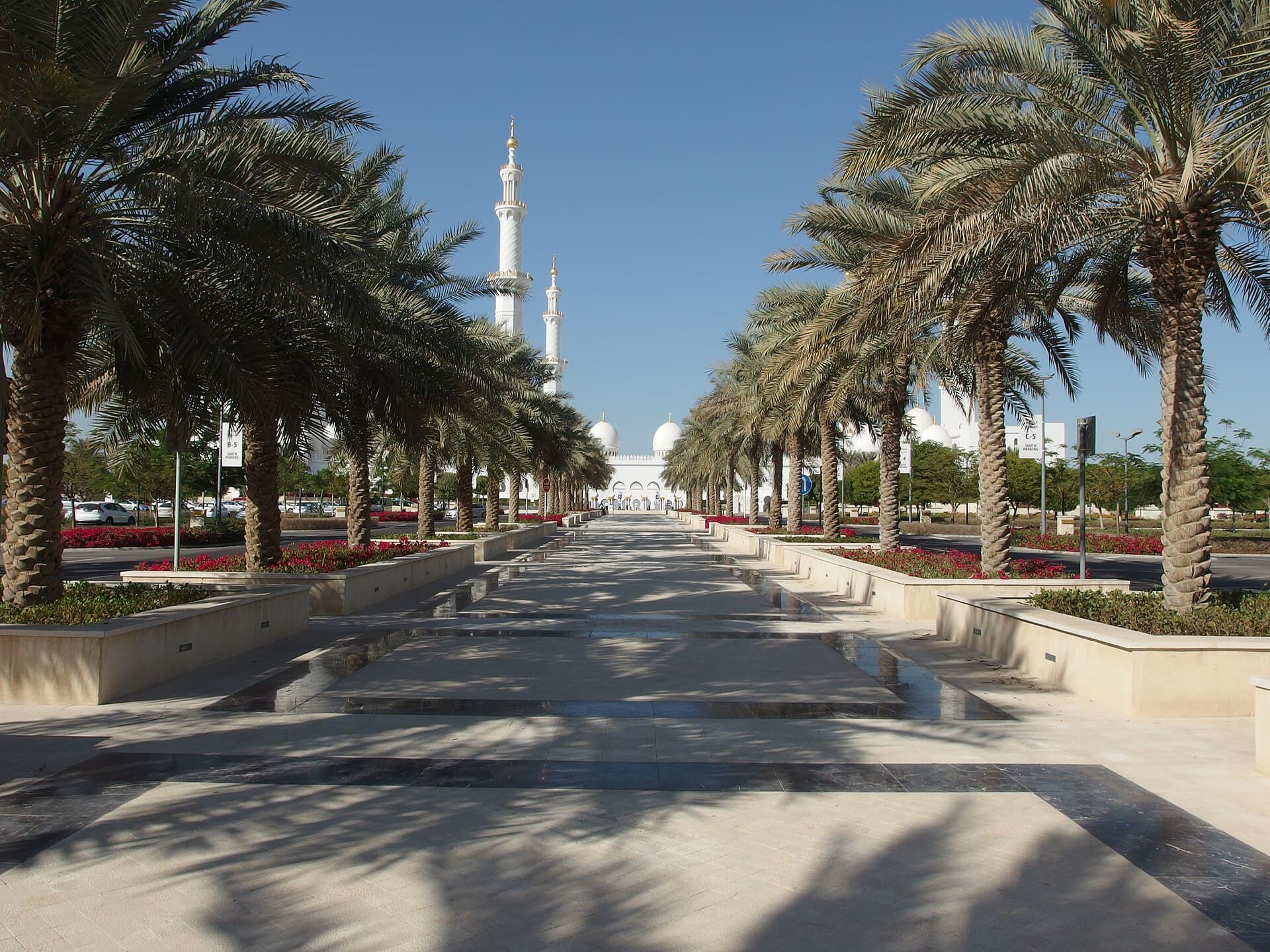
Dubai's creek and skyline, then the Grand Mosque and the Louvre in Abu Dhabi.

Your journey begins with a personal welcome at Cairo International Airport. A representative meets you after immigration and baggage collection and escorts you to a private car for the transfer to your hotel. With 14 days ahead, the first evening is deliberately unhurried: there is no sightseeing to fit in, only a chance to settle into your room and adjust to Egyptian time.
If you arrive early, a gentle walk along the Nile, a drink on a hotel terrace overlooking the river or a quiet dinner near the hotel is a better beginning than squeezing a museum into a travel day. If your flight lands in the evening, simply check in and rest.
Your representative confirms the meeting time with your private guide for tomorrow and explains how the next two weeks fit together: three nights in Cairo, four on a dahabiya, a protected night back in Cairo, then the Emirates. If you have particular interests, from a favorite pharaoh to a passion for Islamic architecture, this is a good moment to mention them so your guide can shape the days around them. Meals are not included today.

With a private guide at your side, the Giza Plateau unfolds at your pace. You arrive in the morning and explore the Great Pyramids as part of a planned funerary landscape of temples, causeways and the tombs of high officials, rather than as isolated monuments. Without a group to keep up with, you can linger at the viewpoints that interest you, ask as many questions as you like and choose when to move on.
You then see the Great Sphinx before continuing to the Grand Egyptian Museum, where the afternoon is devoted to the collections. Your guide can plan a route around your interests, from the treasures of Tutankhamun to colossal royal statues such as the figure of Ramesses II that greets visitors in the atrium, and suggest the right moment to pause for coffee.
Specific galleries, admission categories and any visit inside a pyramid depend on the confirmed ticketing plan; entering a pyramid is an optional extra. Bring a hat and sunglasses for the plateau, which has little shade, and comfortable shoes for the museum's long halls. Meals are not included today, and the evening is yours.

Today your guide leads you into Cairo's older quarters, where the city's history is written in stone, wood and tile. The morning moves between selected Coptic or Islamic landmarks according to opening times and your interests. You might start in Coptic Cairo, where churches built on ancient foundations hold carved screens and icons, or among the great mosques and madrasas of the medieval city with their courtyards and minarets.
In the afternoon you follow the lanes around Al-Muizz Street, a street of medieval gates, domes and fountains that is still alive with workshops and trade. The walk ends in Khan el-Khalili, where your guide can steer you toward good craftsmanship in brass, silver, textiles or perfume, and away from the most insistent sellers.
Time for tea and browsing is part of the day, not an afterthought, perhaps in one of the bazaar's long-established cafés. Shoulders and knees should be covered at religious sites, and a light scarf is useful. This is your last evening in Cairo before the Nile, so it is a good time to pack a smaller bag for the dahabiya, where cabin storage is limited. Meals are not included today.


Today the pace changes. You fly to Luxor in time for the vessel's confirmed embarkation window and are met for the drive to the mooring. A dahabiya is a traditional Nile sailing boat with a small number of cabins, large sails and a broad sundeck, and boarding one feels more like arriving at a private house on the river than checking in at a hotel.
After checking in, you meet the crew and settle into your cabin before the first hours on the Nile. There is no rush to fit in a long extra excursion before departure; the focus today is boarding comfortably and adjusting to the rhythm of the river. Spend the late afternoon on deck as the light softens over the hills of Luxor's West Bank.
Exact sailing, shore visits and the vessel's mooring plan depend on the operator, and your final program will follow your boat's real route. Meals aboard follow the board basis of your chosen dahabiya, as set out in your quote. As evening falls, the quiet of the river is one of the great pleasures of this kind of journey, with far fewer people and engines around you than on a large cruise ship.

This morning you explore a selected West Bank monument with your Egyptologist. Luxor's West Bank holds the royal tombs of the Valley of the Kings, the terraced temple of Hatshepsut beneath its cliffs and the Colossi of Memnon, among other sites, and your guide helps you choose the visit that interests you most. Entry to particular tombs depends on the agreed ticket plan, as tombs are opened and closed in rotation to protect them.
You then return to the dahabiya and set off on a quiet stretch of sailing. With the sails up and the boat moving with the wind, you watch farmers in their fields, children waving from the banks and herons lifting off the water. Smaller vessels can offer this more intimate river rhythm, and they can often moor at quiet spots that larger ships do not use.
Shore stops still depend on navigation and permission, and your final itinerary will match the operator's confirmed schedule. The afternoon is for reading, resting or simply watching the river from the deck. Meals aboard follow your dahabiya's board basis, and in the evening the boat moors along a quiet stretch of bank.


Today brings one of the finest temples on the Nile. If the actual mooring and transport plan permit, you visit the Temple of Horus at Edfu, among the best-preserved temples in Egypt, built in the Ptolemaic period on a site sacred for far longer. Your guide gives you time to read the reliefs, from the giant figures on the entrance pylon to the scenes of Horus's battle with Seth, and to move from the grand entrance through courts and halls into the more intimate inner spaces and the sanctuary.
Back aboard, you spend the afternoon following villages and cultivated fields along the river. This stretch of the Nile is quietly beautiful, with palm groves, sugarcane and mud-brick houses giving way at times to desert cliffs. It is a good afternoon to sit on the sundeck with a book or a camera.
This is an illustrative dahabiya day: the vessel may reorder Edfu and other shore visits depending on wind, navigation and mooring permits, and your final program follows the operator's schedule. Meals aboard follow your dahabiya's board basis. In the evening, the boat moors for the night along the bank.

Today you reach Kom Ombo, where the riverside temple stands on a low rise above a bend in the Nile. Its shared axial plan is unusual: two parallel sets of gates, halls and sanctuaries, one dedicated to the crocodile god Sobek and the other to the falcon-headed Haroeris. Your guide explains how the doubled design worked and points out carved details, including a relief often read as a set of medical instruments, that invite a different kind of looking from Edfu.
If it is included in your program, you can also visit the nearby Crocodile Museum, where mummified crocodiles found in the area are displayed alongside coffins and other finds linked to the cult of Sobek.
Return to the dahabiya for the last full river evening. As the sun goes down, many guests gather on deck to watch the light change on the water. The night is spent near Kom Ombo or Aswan, according to your vessel's real sailing schedule. Meals aboard follow your dahabiya's board basis. Before bed, pack for tomorrow's disembarkation and flight, and settle any extras with the crew.

Your time on the Nile ends this morning. You disembark at the confirmed landing in Aswan, where the river runs between granite boulders and golden dunes, and transfer to the airport for your scheduled flight to Cairo. The morning is planned around that flight rather than further sightseeing.
If the operator's mooring and timing allow a visit to Philae, the island temple of Isis, it must be agreed in your final program; no major visit is assumed on the flight day. Let us know when you request your quote if Philae is important to you, and we will check what your vessel's schedule allows.
In Cairo you settle into your hotel for one night. This night separates the river voyage from your international connection: if a domestic flight is delayed, your flight to Dubai the next day is not affected. Spend the evening at leisure, perhaps with a farewell-to-Egypt dinner of your choosing or a walk along the Nile you have just sailed. Meals are not included today, and your representative confirms the time of tomorrow's airport transfer.

Today you leave Egypt for the Emirates. A transfer takes you to Cairo airport for the confirmed international flight to Dubai, usually around three and a half to four hours in the air. Keep passports and any UAE entry paperwork close at hand, and allow time for check-in and security.
A representative meets you on arrival in Dubai and accompanies you to your hotel. The rest of the day is free. After the slow pace of the dahabiya, Dubai can feel like another world, and there is no need to dive in immediately. Many travelers spend the afternoon at the hotel pool or spa, then step out after dark to see the skyline lit up.
Any special observation deck, evening cruise or restaurant reservation is an optional add-on unless your quote lists it, and if you would like a table at a particular restaurant, tell us when you request your quote so we can try to arrange it. Meals are not included today. Dubai is ahead of Cairo in time, so adjust your watch, and confirm tomorrow's pickup time with your representative before you settle in.
Your first Dubai day explores the city that existed before the oil boom. You begin by Dubai Creek, where trading boats and waterfront lanes introduce Dubai's commercial history as a port for pearling and trade across the Gulf and the Indian Ocean. Wooden dhows still line the wharves, stacked with everything from household goods to electronics, and abra water taxis carry passengers between the banks.
Your guide then leads you through the Al Fahidi Historical Neighborhood, a quarter of restored coral-stone houses with wind towers that cooled the rooms before electricity. The lanes now hold small museums, galleries and courtyard cafés, and walking them with a guide who knows their stories brings the old town to life far better than a quick photo stop.
Whether you cross or follow the creek depends on the confirmed local plan. Take your time: this day is about understanding the city beyond its skyscrapers. After the wooden decks of the dahabiya, it is interesting to compare the dhows of the Gulf with the boats you saw on the Nile. Modest dress is appropriate for cultural buildings, and meals are not included today.
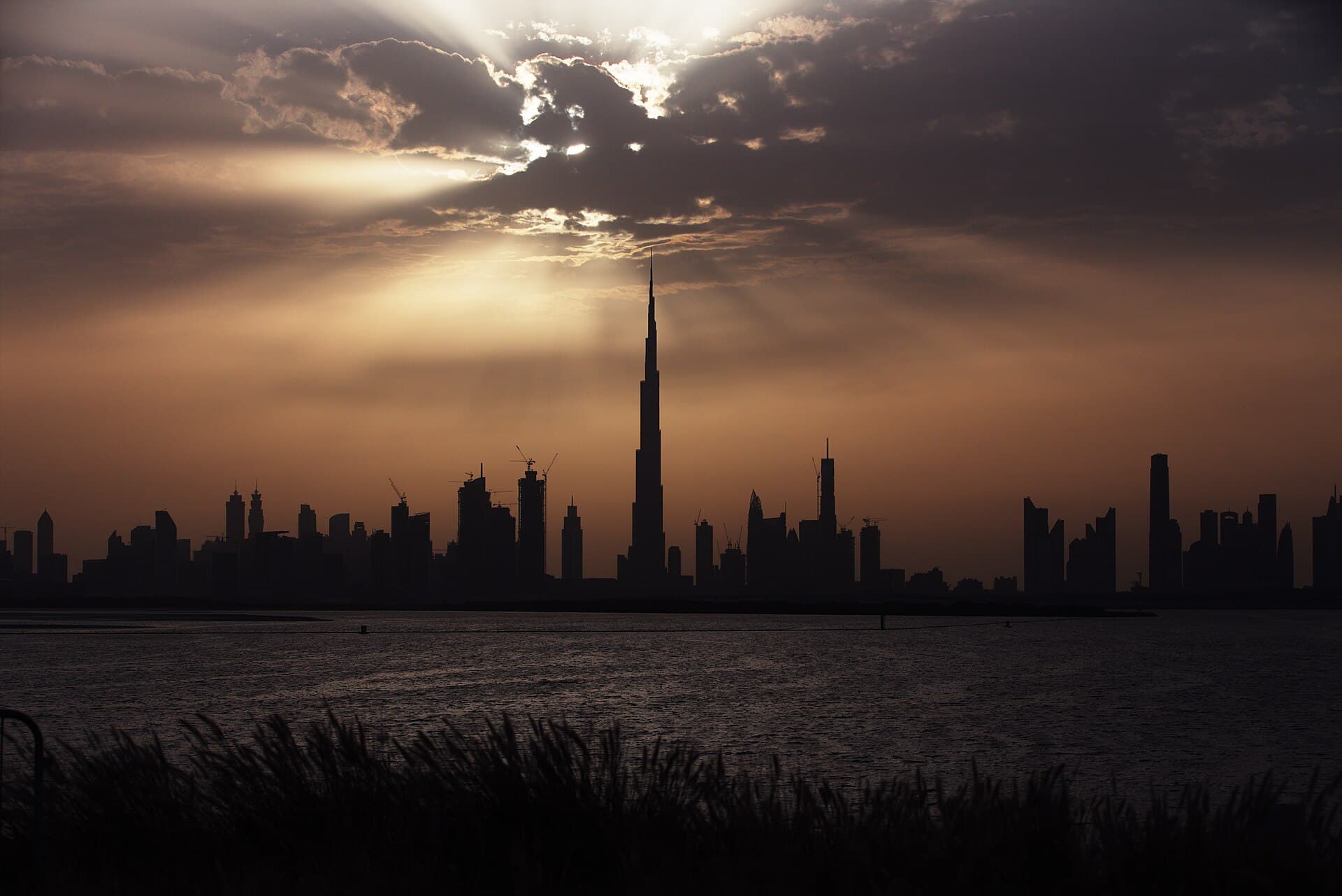
Today shows the other Dubai, the one that rose in a single generation. You explore a selected slice of the modern city, beginning around Burj Khalifa, roughly 828 meters tall, with time to walk the promenades and the lake at its base. Your guide explains how the district was planned around the tower as a single development.
Later you head toward a viewpoint over Palm Jumeirah, the island created from reclaimed sand in the shape of a palm tree, now lined with hotels and villas. Seeing it from the right point helps you grasp its scale and ambition.
An observation-deck ticket at Burj Khalifa is a separate, timed product and is included only if your quote lists it; if you would like a slot around sunset, ask when you request your quote, subject to availability. The day's order follows confirmed reservations and traffic, and the plan favors a few well-paced stops over long queues. Tonight is your last in Dubai, so you may want to reserve a special dinner. Meals are not included today.

Today a private road transfer carries you from Dubai to Abu Dhabi, the capital of the United Arab Emirates, usually in around one and a half to two hours depending on traffic. The drive along the coast shows how the country has grown, with new districts rising between the two cities.
Once you have checked in, take a first look at the Corniche, Abu Dhabi's long waterfront promenade lined with gardens and beaches, or enjoy another comfortable waterfront outing near your hotel. You will notice the change in pace straight away: the capital feels calmer, greener and more spacious than Dubai, and an evening stroll by the sea is a fine way to settle in.
Today focuses on the transfer and settling into the capital. The Sheikh Zayed Grand Mosque has visitor dress and entry rules and deserves a separate, properly timed visit, which is planned for tomorrow alongside the Louvre. Check this evening that you have clothing that covers arms and legs, plus a headscarf for women, and review the mosque's current visitor rules. Meals are not included today, and the rest of the evening is yours.
Your final full day brings together two of the most remarkable buildings in the Gulf. You begin at the Sheikh Zayed Grand Mosque, built in gleaming white marble with dozens of domes, reflecting pools and floral inlays in semi-precious stone. Your visit respects prayer times and the mosque's dress code, and your guide explains the building's design and the many craft traditions that came together in it, from the vast hand-knotted carpet to the crystal chandeliers.
You then continue to Louvre Abu Dhabi, provided admission and opening times are confirmed for the day. Beneath Jean Nouvel's great perforated dome, light falls in shifting patterns across the white galleries and the water around them. The collections are arranged to show connections between civilizations, and after two weeks that began at Giza and passed Edfu and Kom Ombo, you may enjoy spotting ancient Egyptian works among them.
The two sites tell very different stories through architecture and collections, so allow time to sit, look and ask questions rather than treating them as a single hurried stop. Tonight is your final night of the journey. Meals are not included today, and the evening is free.
Your journey ends in Abu Dhabi with a morning kept free of sightseeing. Check out at the agreed time, and a private transfer takes you to the departure airport. Please note that this itinerary ends in Abu Dhabi, so your onward flight should leave from Abu Dhabi unless your quote arranges otherwise.
Before you travel, confirm your flight time, baggage allowance and any visa or exit requirements. Extra hotel time, late check-out or another excursion is not included unless it appears in your confirmed booking. If your flight leaves late in the day, mention it when you request your quote and we can suggest how to use the hours comfortably.
Over 14 days you have moved from the pyramids and the lanes of medieval Cairo to the slow, wind-driven rhythm of a dahabiya, past Edfu and Kom Ombo to Aswan, and on to two cities that have reinvented the Gulf within a single lifetime. The extra night in Cairo, the free afternoons and the private guiding were all there to make a journey of this length feel unhurried. Meals are not included today, and the day is shaped around a comfortable departure.
Per person, two sharing. Prices are a starting point; your planner confirms the final price for your dates.
| Two sharing | $3,730 |
| Single room | $5,220 |
| Two sharing | $4,040 |
| Single room | $5,660 |
Upper Egypt and the UAE are both very hot from May to September. October to April brings comfortable temple visits and the best conditions for walking around Dubai and Abu Dhabi.
Pack light, breathable clothes and good walking shoes. The Sheikh Zayed Grand Mosque has strict visitor dress rules, so bring long sleeves, long pants or skirts, and a scarf for women.
The pace is moderate, with walking through archaeological sites and city streets. The sailing days give you time to rest aboard between shore visits at Luxor, Edfu and Kom Ombo.
The 4-night sailing runs from Luxor toward Aswan on a small vessel. Shore stops, their order and the mooring plan depend on the operator's confirmed schedule and on river navigation.
You fly Cairo to Luxor and Aswan back to Cairo, with a Cairo night before the flight to Dubai. Dubai to Abu Dhabi is a private road transfer, and you depart from Abu Dhabi.
Entry visas for each country and gratuities are not included. Cards are widely accepted in the UAE and in Egyptian hotels; carry Egyptian pounds in cash for tips aboard and at sites.
A dahabiya is a traditional Nile sailing boat with large sails and a small number of cabins, so it carries far fewer guests than a standard cruise ship. Sailing depends partly on the wind, and smaller boats can often moor at quieter spots. The exact vessel, cabin type and sailing program are confirmed in your quote.
Not by default. The dahabiya sails from Luxor toward Aswan, and on Day 8 you disembark and fly to Cairo. A visit to Philae is possible only if your vessel's mooring and timing allow it, and it has to be agreed in your final program. Tell us when you request your quote if it is important to you.
In Cairo you have your own guide for Giza, the Grand Egyptian Museum and historic Cairo, and an Egyptologist accompanies the shore visits from the dahabiya. Dubai and Abu Dhabi sightseeing follows the guided program named day by day. Admission categories, special tomb tickets and pyramid interiors depend on the ticketing plan in your quote.
Domestic flights in Egypt can change at short notice. Flying from Aswan to Cairo on Day 8 and staying overnight means a delay does not affect your international flight to Dubai on Day 9. It also gives you a quiet evening between two very different parts of the trip.
It is designed with adults in mind. The dahabiya days are slow and quiet, with little on board to entertain young children, and the trip covers two countries and three hotels after the sailing. Families with older children who enjoy history can travel comfortably; ask about cabin and room configurations when you request a quote.
Yes, you must meet the entry rules of each country. Entry rules depend on your passport and can change, so please check the official source for both countries before you travel. Visas are not included.
October to April is the most comfortable season for both the Nile and the Emirates, with warm days and pleasant evenings. Dahabiya sailings are often seasonal, and in summer the heat in Upper Egypt, Dubai and Abu Dhabi is intense. Ask us which months your preferred vessel sails when you request a quote.


Photo credits: Sheikh Zayed Grand Mosque — Guilhem Vellut from Annecy, France / Wikimedia Commons (CC BY 2.0) · Dubai — CT Cooper / Wikimedia Commons (Public domain) · Burj Khalifa — imran shahabuddin / Wikimedia Commons (CC BY 2.0) · Abu Dhabi — Davide Mauro / Wikimedia Commons (CC BY-SA 4.0)
TALK TO A REAL LOCAL EXPERT
Book a free 30-minute consultation with one of our Egypt specialists. We’ll talk through your ideas, answer your questions and help you plan the perfect trip.
“We are here, plan your Egypt journey with people who know it best.”