Book a free 30-minute consultation with one of our Egypt specialists. We’ll talk through your ideas, answer your questions and help you plan the perfect trip.
Essential cookies keep the site working. With your OK, analytics cookies show us which pages help. Privacy Policy.
The best snorkeling beaches in Sharm El Sheikh are Ras Um Sid, Sharks Bay and Ras Nasrani, where coral reefs start a short swim from shore. Naama Bay is the best sandy beach for easy swimming and families. For the richest reefs, add a Ras Mohammed or Tiran boat day.
Sharm El Sheikh sits on the southern tip of the Sinai, where the Gulf of Aqaba meets the Red Sea. Its reefs grow right up to the shore in many places. That means you can often snorkel straight from a hotel jetty, without a boat.
The catch is that beaches here are not all alike. Some are soft sand, some are coral platforms and some drop into deep water within a few strokes. This guide explains each main beach and reef, who it suits, and how to plan a safe, rewarding snorkeling week.
Sharm El Sheikh beaches at a glance
Beach or reef
Entry
Level
Best for
Naama Bay
Sandy beach, gentle slope
Beginner
Swimming, families, water sports
Sharks Bay
Wooden walkways over coral
Confident beginner and up
Daily snorkeling from the hotel
Ras Um Sid (El Fanar)
Pier with ladder, or a swim from the public beach
Beginner in calm weather; drop-off for confident swimmers
Coral wall, giant clams, reef fish
Ras Katy, Faraana Reef, Temple Reef
Hotel jetties along the Hadaba coast
Beginner to intermediate
Calmer coral gardens near Ras Um Sid
Ras Nasrani
Hotel jetties, mostly reef
Shallow parts for all; drop-off for experienced
Large coral colonies, Tiran views
Nabq Bay
Long pontoons over shallow reef
Beginner to intermediate
Quiet beaches, nature, space
Ras Mohammed
Boat or road excursion
All levels with a guide
Richest reefs, the classic day out
Tiran reefs
Boat excursion
Confident swimmers
Open-water reefs, bigger fish
Naama Bay: the easiest swimming beach
Naama Bay is Sharm's best-known beach and its center of activity. It is a long, sheltered bay with a sandy bottom that has been cleared of rocks and coral. The water is usually calm and clear, which makes it the easiest place for young children and nervous swimmers.
Most hotels on the bay have their own beach sections with loungers and shade. Water sports are offered from the beach, and restaurants are a few steps away. Snorkeling is more limited than at the reef-lined bays, though there is some reef toward the edges of the bay.
Choose Naama Bay for a classic beach day. Choose elsewhere if coral is your main goal.
Sharks Bay: snorkel from the walkway
Sharks Bay lies north of Naama Bay. The shore here is coral and rock, so wooden walkways run out over the reef to deeper water. Snorkelers come for the house reefs, which many guides rank among the best shore snorkeling in Sharm.
The appeal is coral, reef fish and the ease of slipping in from a ladder every morning. The water deepens quickly at the end of the walkways, so it suits people who are comfortable swimming out of their depth.
Many resorts here also have a calmer area for children and beginners. Ask your hotel how its beach is laid out before you book.
Ras Um Sid and the Hadaba reefs
Ras Um Sid sits at the southern end of Sharm, below the Hadaba headland. Several snorkeling guides rate it as the top shore site in town. The reef flat is shallow and then drops away in a steep wall close to shore.
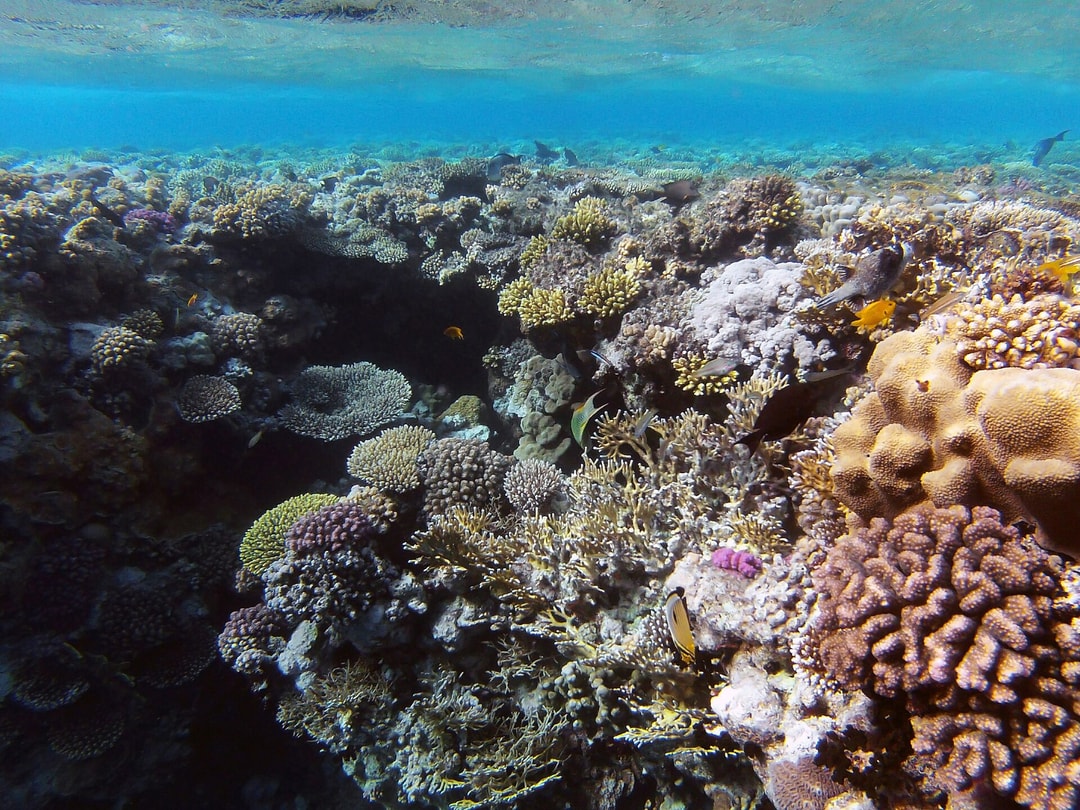
On the flat, look for giant clams, clownfish in anemones, angelfish, butterflyfish and parrotfish. Along the wall, divers find gorgonian fan corals deeper down. The easiest entry is from the El Fanar pier, which has a ladder straight onto the reef. You can also swim from the public beach along the reef edge, which is a longer swim.
Currents can be strong near the cape. Stay close to the reef edge, check conditions with staff, and do not drift away from your exit. There are no lifeguards on the reef, so snorkel with a buddy.
Ras Katy, Faraana Reef and Temple Reef
West of Ras Um Sid, the same coastline continues to Ras Katy, Faraana Reef and Temple Reef. These are calmer, more sheltered sites reached from nearby hotel jetties. They suit beginners and families who want coral without the drop-off. Temple Reef lies a little offshore, so it is usually reached by boat or by stronger swimmers.
Glass-bottom boats sometimes work close to these reefs. Watch for boat traffic and stay inside marked swimming areas.
Ras Nasrani and Nabq Bay: the northern reefs
Ras Nasrani is in the north, near the airport. The coastline is mostly reef, with only a few sandy patches. Snorkelers find large coral colonies, reef fish and sometimes rays or turtles, with views across to Tiran Island.
The shallow lagoons suit all levels. The drop-off at the reef corner can have strong currents, so leave it to experienced snorkelers.
Nabq Bay is farther north and quieter still. Its beaches are wide and sandy, but the water near shore is a very shallow reef flat. Long pontoons take you out to swimming depth. Nabq is also known for wind, especially in winter. The nearby Nabq protected area adds mangroves and birdlife for anyone who likes nature.
Boat trips: Ras Mohammed and the Tiran reefs
Shore snorkeling is good in Sharm. The boat sites are better. Plan at least one boat day if coral and fish are why you came.
Ras Mohammed National Park
Ras Mohammed is at the very southern tip of the Sinai Peninsula. It was declared a protected area in 1983 and is Egypt's first national park. Its reefs are among the best preserved in the region, and visits run by boat or by road from Sharm.
A typical boat day includes two or three snorkel stops chosen by the captain. The stops depend on wind, waves and current that day. Many boat trips also stop at White Island, a white sandbar, when conditions allow.
Tiran Island lies at the entrance to the Strait of Tiran, north of Sharm. Four reefs in the strait carry the names Jackson, Woodhouse, Thomas and Gordon. They sit in open water, so currents can be strong.
Tiran trips suit confident swimmers. Listen to the briefing, stay with your guide and use a float or life jacket if you are unsure. Turtles, larger reef fish and schools of colorful fish are possible, but no one can promise sightings.
Non-swimmers and nervous swimmers
You can still see the reef without getting wet. The glass-bottom boat trip and the semi-submarine trip both show coral and fish through windows. They work well for grandparents, young children and anyone uneasy in deep water.
Which beach suits you
Families with young children
Stay on the sand at Naama Bay or a resort with a sheltered lagoon. Try shallow snorkeling at Ras Katy or Faraana Reef with an adult close by. For a reef view without swimming, book the semi-submarine.
Beginners
Start on calm, shallow reefs such as Faraana Reef, the Ras Nasrani lagoons or a gentle hotel house reef. Practice with your mask near the jetty before heading toward deeper water. Then join a guided boat day to Ras Mohammed.
Confident snorkelers
Snorkel Ras Um Sid and Sharks Bay from shore, then add a Ras Mohammed day. Ask us about Tiran if you want a second boat day. Strong swimmers can follow the reef from Ras Um Sid toward its neighbors in calm conditions.
Pick Ras Nasrani or Nabq Bay for calm beaches, and plan one boat day to Ras Mohammed. Our guide to where to stay in Sharm El Sheikh matches each area to its beach.
How to snorkel safely and protect the reef
Red Sea reefs are fragile, and some rules are strictly enforced in protected areas. Follow these basics everywhere:
Never stand on or touch coral. Use jetties, ladders and sandy patches to enter and exit.
Do not feed or chase fish, turtles or rays. Keep a respectful distance.
Wear reef shoes on rocky shores. They protect your feet from coral, urchins and sharp rock.
Use a rash guard. It protects you from the sun and cuts down on sunscreen in the water. If you use sunscreen, choose a reef-safe one.
Check the current before you swim. Ask staff about conditions, and swim against the current first so it brings you back.
Snorkel with a buddy. Most hotel reefs have no lifeguards.
Do not collect shells or coral. Taking them is not allowed.
Local rules change, so follow signs, hotel staff and your guide.
Timing your beach days
Mornings are usually the calmest time on the water. Light is good, the wind tends to pick up later, and you avoid the strongest midday sun. Boat trips typically leave early for the same reasons.
Midday is best spent in the shade or the pool, especially in summer. Late afternoon is pleasant for one more swim before sunset. In winter, the water feels cooler on long swims, so a thin wetsuit or rash guard helps. See our best time to visit Egypt guide for the year at a glance.
What to pack for a snorkeling week
Your own mask, if you have one that fits well. Rental masks vary.
Reef shoes or water shoes for rocky entries.
A rash guard or thin wetsuit, plus a hat and sunglasses.
Reef-safe sunscreen and a refillable water bottle.
A dry bag for boat days, with a towel and a light layer for the ride back.
What is the best beach in Sharm El Sheikh for snorkeling?
Ras Um Sid is often rated the best shore site, with a shallow reef flat and a steep coral wall close to the pier. Sharks Bay and Ras Nasrani are strong alternatives.
Which beach in Sharm El Sheikh is best for kids?
Naama Bay, because it has a sandy bottom and calm, sheltered water. Resorts with a sandy lagoon are also good choices for small children.
Can you snorkel in Sharm El Sheikh without a boat trip?
Yes. Many hotels have jetties straight onto the reef, especially in Sharks Bay, Ras Nasrani and the Hadaba coast. A boat day adds the richest reefs.
Is Ras Mohammed better than Tiran for snorkeling?
Ras Mohammed is the better first choice for most people, with protected reefs and stops chosen for conditions. Tiran suits confident swimmers who are comfortable in open water.
Do I need reef shoes in Sharm El Sheikh?
On most beaches outside Naama Bay, yes. Many entries are rocky or coral, and reef shoes protect your feet and the reef.
Will I see turtles or dolphins while snorkeling?
You might see turtles or rays, but sightings are never guaranteed. Wildlife depends on the site, season and conditions on the day.