
Alexandria gets two nights
The Mediterranean city is a real stay, not a long day trip from Cairo.
Tour Operator · Egypt, Jordan, UAE, Turkey and Morocco
Cairo and Mediterranean Alexandria, then two days in Petra, Wadi Rum and the Dead Sea
Cairo to Amman · 13 days
This is a 13-day Egypt and Jordan trip that swaps the Nile for Egypt's Mediterranean coast. You see Giza, the Grand Egyptian Museum and historic Cairo, spend two nights in Alexandria, then fly to Jordan for three nights near Petra with two full days in the city, a Wadi Rum desert camp, a Dead Sea night and Madaba on the way to Amman. It suits active travelers and repeat visitors who want more than the classic route.
Most Egypt and Jordan trips follow the Nile. This one turns north to the sea. After Giza, the Grand Egyptian Museum and historic Cairo, you spend two nights in Alexandria, the Mediterranean city founded by Alexander the Great, with time for the Citadel of Qaitbay, the Corniche, the Catacombs of Kom el-Shoqafa and the Bibliotheca Alexandrina.
A night back in Cairo breaks the journey before you fly to Amman, and then Jordan gets real time. Three nights near Petra give you two full days in the ancient city: the classic walk through the Siq to the Treasury, and a second day for the long climb toward the Monastery, or for slower exploring if you prefer.
The trip then moves through Jordan's great landscapes in order: a night at a desert camp in Wadi Rum, a night beside the Dead Sea, and Madaba and Mount Nebo on the way to a final night in Amman. It suits travelers who have seen the classic Nile route, or who simply want a broader view of the region.
The Mediterranean city is a real stay, not a long day trip from Cairo.
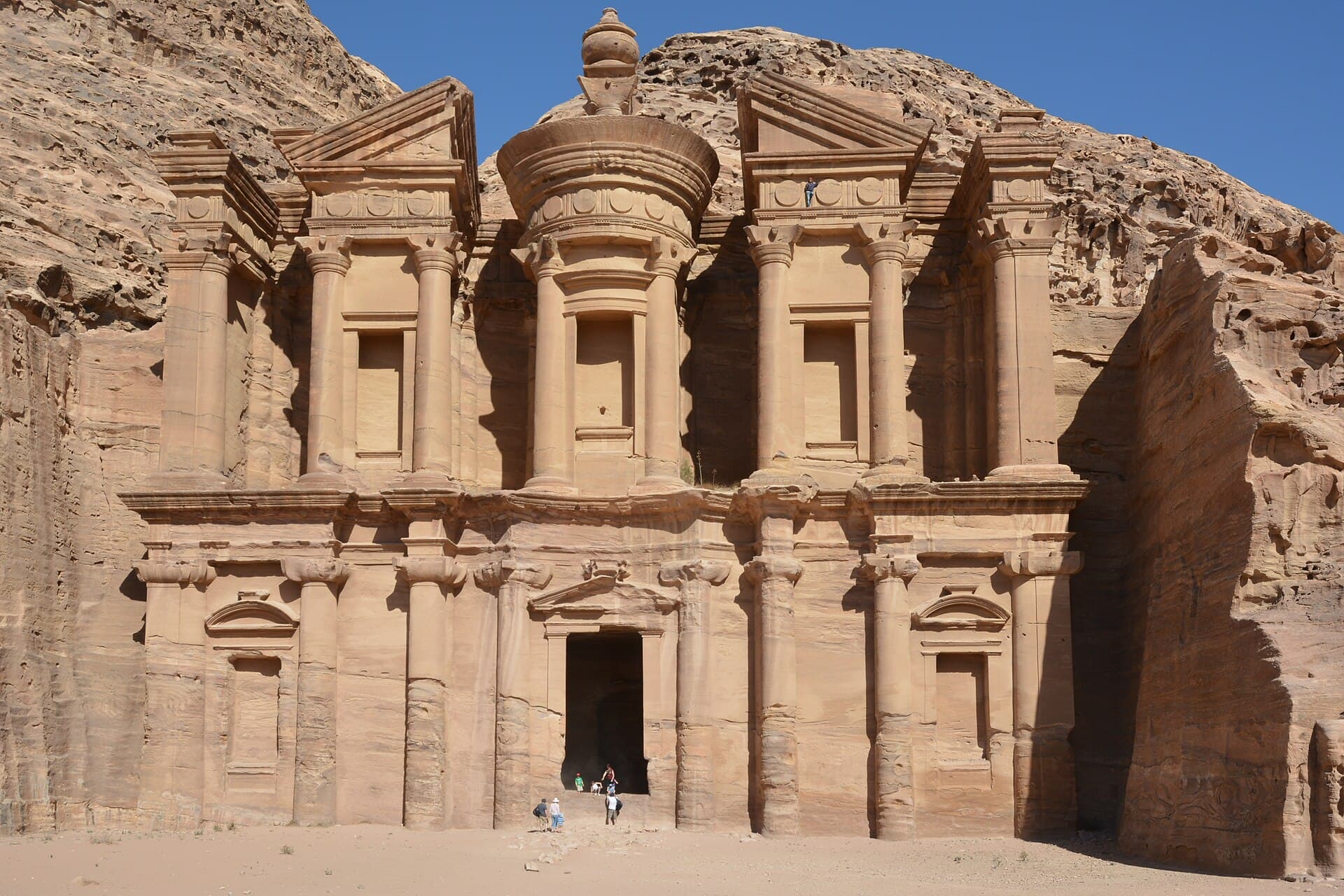
The Siq and the Treasury first, then the Monastery trail or a slower second look.
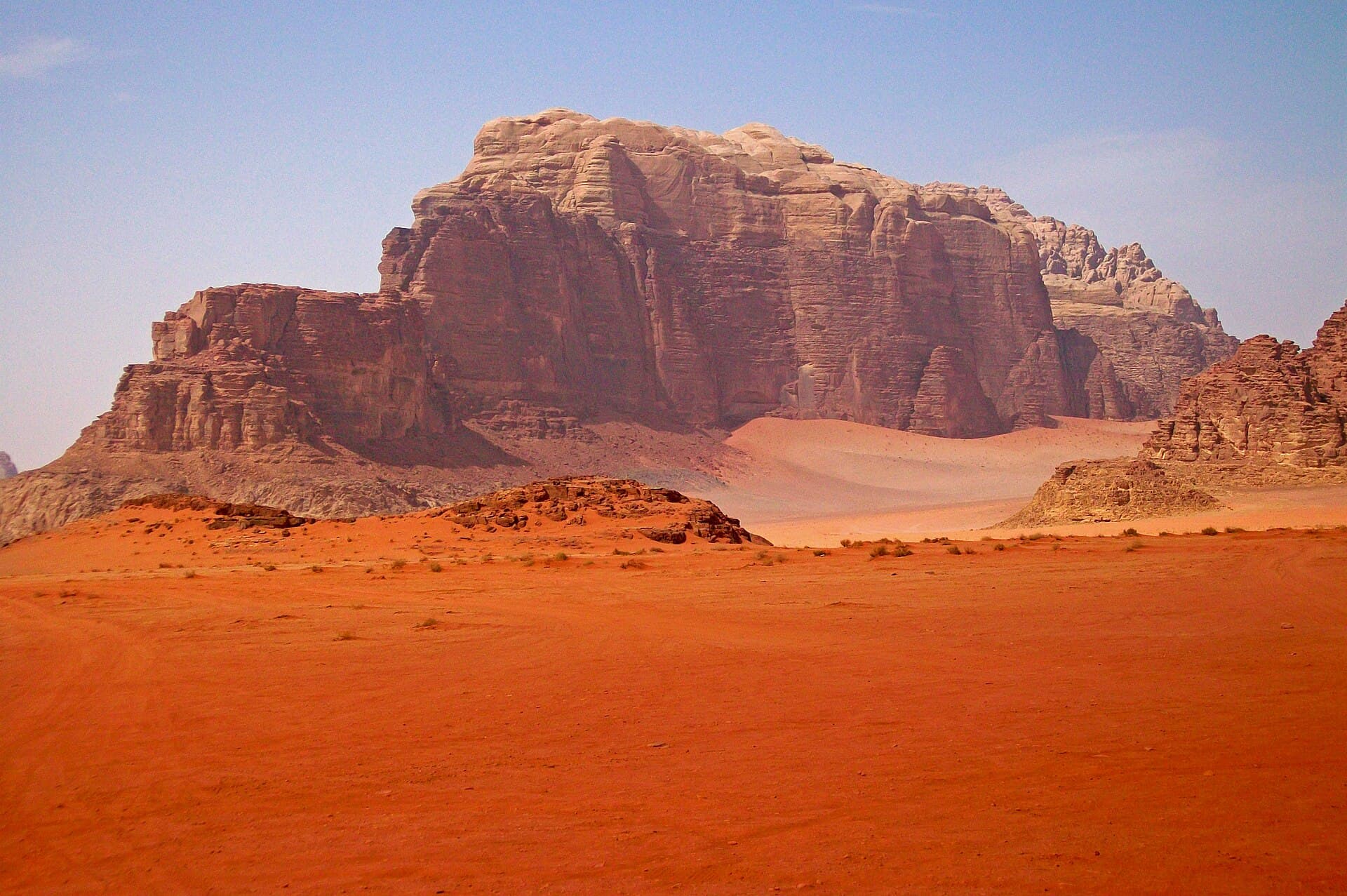
Petra, the Wadi Rum desert, the Dead Sea and Madaba, without doubling back.

You return from the coast to Cairo the day before the flight to Amman.

A representative meets you at Cairo airport after immigration and baggage collection and accompanies you to your private transfer. The drive into the city introduces Cairo's scale, traffic and energy, a contrast you will appreciate later in the week when you reach the calmer Mediterranean coast.
Today is for arriving and settling in. Over the next 13 days you will change hotels several times and cross from Egypt to Jordan, so beginning rested is worth more than any extra sightseeing. Check in, take time to recover from your flight and review tomorrow's meeting time with your representative.
If you arrive early and have energy, a gentle walk near the hotel or a relaxed dinner nearby is a better start than squeezing a major museum into a travel day. Your representative can help with practical matters such as local currency, a SIM card and what to wear at the sites, and can talk you through the shape of the trip: Cairo and Giza first, then Alexandria, then Jordan from Petra to the Dead Sea. Many travelers find it useful to keep a small day bag ready for the Alexandria nights, so the main suitcase stays packed.

Begin on the Giza Plateau, where the Great Pyramids stand within an ancient funerary landscape rather than as isolated monuments. The pyramids of Khufu, Khafre and Menkaure were built around 4,500 years ago, and your guide explains how they related to the temples, causeways and officials' tombs around them. Walk between viewpoints with time for questions and photographs.
The Great Sphinx follows, carved from the bedrock beside Khafre's causeway. Its lion's body and royal head have become a symbol of Egypt itself.
In the afternoon you continue to the Grand Egyptian Museum, a short drive from the plateau, home to one of the world's great collections of ancient Egyptian objects, including the treasures of Tutankhamun. On this route the museum also sets the scene for Alexandria: look out for objects from the Greek and Roman periods, when Egypt was ruled from the Mediterranean coast, because you will see that world for yourself in a few days.
Specific galleries, admission categories and any pyramid-interior visit depend on the confirmed ticketing plan. You return to your Cairo hotel in the evening.


Today shows Cairo's later layers. In the morning you visit a selection of Coptic or Islamic landmarks in the older quarters, chosen according to opening times and your interests. In Coptic Cairo, the Hanging Church, built above the gatehouse of a Roman fortress, is one of the oldest churches in Egypt and a reminder of how much of the country's history belongs to the Christian centuries.
Later, follow the lanes around Al-Muizz Street, the main artery of medieval Cairo, and continue into Khan el-Khalili. Here worship, trade and everyday life continue alongside centuries of architecture: carved wooden screens, stone domes, spice merchants and coppersmiths share the same streets.
Your guide will help distinguish the stories of the places you enter. Time for tea and browsing is part of the day, not an afterthought, so choose a café and watch the market move around you. Dress modestly, with shoulders and knees covered, and carry a scarf for mosques.
This evening, pack an overnight bag for Alexandria. Tomorrow you head north to the coast for two nights, then return to Cairo before flying to Jordan.

Drive north from Cairo to Alexandria, a journey of roughly three hours on the desert road depending on traffic. As you approach the coast, the air softens and the light changes: Alexandria faces the Mediterranean, not the desert, and it feels like a different country.
Founded by Alexander the Great in the fourth century BC, Alexandria became the capital of the Ptolemies and one of the great cities of the ancient world, home to the famous lighthouse and library. You begin beside the harbor, where the Citadel of Qaitbay, a fifteenth-century fortress, stands on or near the site of the ancient Pharos lighthouse. Its walls look out over fishing boats and the open sea.
The Corniche, the long seafront road that curves around the eastern harbor, introduces a city shaped by the Mediterranean rather than the Nile, with grand old buildings, cafés and fishermen along the sea wall.
After checking into your hotel, keep the afternoon light. A seaside walk and time to watch the working waterfront offer a welcome change of pace after Cairo's busy streets. In the evening, Alexandria is known for fresh seafood, and your guide can suggest a restaurant.


Today you explore Alexandria's different historical voices. The Catacombs of Kom el-Shoqafa, cut into the rock in the Roman period, reveal a distinctive blend of cultural traditions: Egyptian gods appear in Roman dress, and Greek and Egyptian styles sit side by side in the carvings. You descend a spiral staircase into a cool, multi-level burial complex that is unlike anything you will see in Luxor or Giza.
The Bibliotheca Alexandrina, opened in the early 2000s as a tribute to the ancient Library of Alexandria, offers a modern setting for scholarship and public life. Its vast tilted roof and granite wall carved with letters from scripts around the world make it one of the most striking modern buildings in Egypt. Interior museums and exhibits may need separate tickets.
Add a harbor view or one further archaeological stop only if there is time. The day makes room for both the city's antiquities and its contemporary character, from old cafés and bookshops to the busy seafront.
Your second evening by the Mediterranean is free. Enjoy a sunset walk along the Corniche, a coffee in one of the city's historic cafés or a seafood dinner by the harbor.


Enjoy breakfast on the Mediterranean before the drive back to Cairo, a road journey of around three hours depending on traffic. Depending on the confirmed route and timing, you may stop for a planned museum visit, or simply allow the afternoon for rest.
Today's priority is a safe, comfortable transfer. We do not attach a major Giza sightseeing program to a long road day unless the timing has been properly checked, because tomorrow brings an international flight and a long drive in Jordan.
Back in Cairo, settle into your hotel for the night. This buffer night between Alexandria and the flight to Amman is a deliberate part of the plan: it gives you time to repack, rest and prepare for a very different second half of the trip. Use the evening to organize your luggage for Jordan, where you will need sturdy walking shoes for Petra, warm layers for the desert camp and swimwear for the Dead Sea.
If you have energy, a final Cairo dinner is a fine way to say goodbye to Egypt. Your representative will confirm tomorrow's pickup time for the airport and answer any last questions about the flight to Jordan.
Today you take the confirmed flight from Cairo to Amman and meet your Jordanian representative after arrival formalities. Whether the flight is ticketed by us is shown in your quote.
From Amman you continue south by private vehicle to Petra, a road journey that usually takes around three hours across Jordan's high plateau. Allowing for airport procedures and a realistic road transfer, you reach Petra in the afternoon or evening, depending on flight times.
Check in and leave the evening free. The first view of Petra's famous architecture is worth saving for a full morning rather than attempting the site after a long international travel day, and on this route there is no need to hurry: you have three nights here and two full days in the ancient city.
Use the evening to prepare for the walking ahead. Good shoes with grip, a hat, sunscreen, water bottles and small snacks matter more in Petra than almost anywhere else on the trip. If you are thinking about the Monastery trail on Day 9, talk to your guide tonight about your fitness and the weather forecast so you can plan the two days together. You will need Jordanian dinars for small purchases and tips.
Enter Petra on foot through the Siq, the winding gorge about a kilometer long that served as the main approach to the Nabataean capital. The rock walls rise high above you, with colors shifting from rose to ochre, and carved water channels along the sides show how the Nabataeans managed water in the desert.
At the end of the Siq, the Treasury, Al-Khazneh, appears through the narrow opening, carved directly into the cliff face around 2,000 years ago. It is one of the world's great travel moments.
Continue into the wider archaeological city as energy permits. Beyond the Treasury lie the Street of Facades, a theater carved from the rock, the Royal Tombs high in the cliff, and the colonnaded street leading to the ruins of temples and public buildings. The site is much larger than its most photographed facade.
Because you have a second day in Petra tomorrow, today can be thorough without being exhausting. Your guide discusses walking distances, weather and access, and how best to divide the site between the two days. Many travelers return to the hotel in the late afternoon to rest their legs before the next climb.
Return to Petra for a second, more focused day. If trail conditions and your fitness make it appropriate, you take the route toward the Monastery, Ad Deir, one of Petra's largest and most impressive monuments, set high in the mountains above the city center. The climb follows a long rock-cut stairway, often described as around 800 steps, and takes a good part of the morning at a steady pace.
The ascent is substantial and not an automatic inclusion for every traveler. Start early to avoid the heat, carry plenty of water and take breaks. At the top, the Monastery's huge facade and the views over the surrounding mountains reward the effort.
Those who prefer less climbing can spend longer among accessible monuments and viewpoints, revisit favorite places from yesterday or explore quieter corners at a gentle pace. Your guide helps you choose what suits you.
A 2-day stay offers a more balanced encounter with this remarkable landscape, giving you time to see Petra in different light and from different angles. Return to your hotel in the afternoon for a well-earned rest. Tonight is your third and last night near Petra.
Travel from Petra to Wadi Rum, a drive of under two hours, and meet an authorized local desert operator for a route suited to weather and protected-area rules. After two days of walking in Petra, today you let a four-wheel-drive vehicle do the work.
Wadi Rum is a protected desert of sandstone and granite mountains, red dunes and narrow canyons, recognized by UNESCO for its landscape and long human history. Depending on the route, you may see rock inscriptions left by ancient travelers, natural rock bridges and wide views from high dunes. The sandstone formations, shifting light and enormous sense of space reward patient observation.
Photographers will want to be ready in the late afternoon, when the low sun turns the cliffs deep red and long shadows stretch across the sand. Check into your desert camp for the evening, where camps usually serve a traditional dinner; what is included is set out in your quote.
Night temperatures can drop sharply, so keep a warm layer handy. On a clear night, the stars are extraordinary. The camp standard, the vehicle type and the exact excursion duration are confirmed in your quote.
Leave Wadi Rum for the Dead Sea, changing from sandstone desert to the lowest part of the Jordan Rift Valley. The road journey takes several hours, and as you descend you will notice the air becoming warmer and heavier: the Dead Sea shore lies more than 400 meters below sea level.
After the road transfer, settle into your selected resort and enjoy the water under local safety guidance. The Dead Sea is so salty that you float without effort, a strange and memorable experience. Enter slowly, keep the water away from your eyes, float on your back, limit your time in the water and rinse off afterward.
Swimming and mud treatments should follow resort rules, and beach access depends on the chosen property. Today is a transfer-and-rest day rather than a second full desert excursion, a welcome change after the climbing at Petra and the night in Wadi Rum.
Spend the evening relaxing by the pool or watching the sunset across the water, when the hills on the far shore turn soft shades of pink and gold. Drink plenty of water, as the heat and the low altitude can be dehydrating.

Travel toward Amman via Madaba to view its renowned mosaic map, then continue to Mount Nebo for a landscape and heritage stop. Both are a short drive up from the Dead Sea, making this one of the easiest travel days of the trip.
In Madaba's Church of Saint George, the sixth-century mosaic floor map of the Holy Land is the oldest surviving map of its kind, with Jerusalem shown in detail. Madaba has long been a center of mosaic art, and you may see craftspeople continuing the tradition in local workshops.
Mount Nebo is revered as the place where Moses viewed the Promised Land. The memorial church on the summit preserves fine mosaics, and the viewpoint looks out over the Jordan Valley and the Dead Sea where you spent last night.
These places add a different historical perspective from Petra's rock-cut architecture and from the Greco-Roman world you saw in Alexandria, completing a journey through several civilizations. Settle into the capital afterward, keeping evening plans light. Opening times, accessibility and the selected museum or church entries need confirmation for each departure.

After breakfast, check out at the agreed time and transfer to the departure airport. Your 13-day trip ends in Amman.
Please verify flight times, luggage allowance and any visa or exit requirements before travel. Extra hotel time, late check-out or an additional excursion is not included unless it appears in the confirmed booking, so let us know your flight time when you book.
The day's schedule is shaped around a comfortable departure rather than new sightseeing. It is a good moment to reflect on how much ground you have covered: the pyramids and the medieval lanes of Cairo, the Mediterranean seafront and catacombs of Alexandria, two full days in Petra including the climb toward the Monastery, the silence of the Wadi Rum desert, the strange buoyancy of the Dead Sea and the mosaics of Madaba.
Because the trip ends in Amman, make sure your international ticket departs from Jordan. If you want to extend your stay, the Roman city of Jerash or an extra night in Amman are easy additions; ask us before you book. Have a safe journey home.
Per person, two sharing. Prices are a starting point; your planner confirms the final price for your dates.
| Two sharing | $3,329 |
| Single room | $4,759 |
| Two sharing | $3,999 |
| Single room | $5,719 |
October to April is the most comfortable time for Cairo, Petra and Wadi Rum. The Dead Sea day is planned as a rest.
Pack sturdy shoes with good grip for Petra and desert sand, a sun hat, and swimwear for the Dead Sea. Cover shoulders and knees for mosques, churches and Mount Nebo.
The pace is active, with significant walking on uneven terrain. The Monastery trail at Petra is a substantial climb and optional; those who prefer less climbing can stay among the accessible monuments.
Alexandria is a round trip by road from Cairo, followed by a buffer night in Cairo before the flight to Amman. In Jordan you travel by road between Petra, Wadi Rum and the Dead Sea.
Entry visas for Egypt and Jordan are not included. Entry rules depend on your passport and can change, so please check the official source before you travel.
Cards work in most hotels; carry cash for tips and small purchases in each country. Tipping guides, drivers and desert operators is customary, and gratuities are not included.
A day trip from Cairo means around six hours in a car for a few hours of sightseeing. Two nights give you a relaxed first afternoon by the sea, a full day for the catacombs and the library, and evenings on the Corniche. It turns Alexandria into a real chapter of the trip.
It is a demanding climb up a long rock-cut stairway, often described as around 800 steps, and takes a good part of a morning. Reasonable fitness, good shoes and plenty of water are essential. It is optional: if you prefer, your guide plans a gentler second day among Petra's other monuments.
After returning from Alexandria, you spend a night in Cairo and fly to Amman on Day 7. A Jordanian representative meets you, and a private vehicle drives you about three hours south to Petra. Your quote shows whether the regional flight is ticketed as part of your booking.
You need entry permission for both Egypt and Jordan, and visas are not included. Entry rules depend on your passport and can change, so please check the official source before you travel.
No. This itinerary replaces the Nile Valley with Alexandria and a longer stay in Jordan. If you want Luxor or a Nile cruise as well, our 12-day and 14-day Egypt and Jordan packages include them.
Spring and fall are ideal across the whole route. Alexandria is milder than Cairo in summer but can be wet and windy in winter. Petra and Wadi Rum are hot in summer and cold at night in winter, which matters for the Monastery climb and the desert camp. October to April works well overall.
Pack clothing that covers shoulders and knees, sturdy hiking shoes with good grip for Petra's stairways, a hat and sunscreen, a warm layer for Wadi Rum, swimwear and water shoes for the Dead Sea, and a light jacket for breezy Alexandria evenings. A daypack with room for water is essential on both Petra days.


Photo credits: Petra — Azurfrog / Wikimedia Commons (CC BY-SA 3.0) · Wadi Rum — Daniel Case / Wikimedia Commons (CC BY-SA 3.0) · Dead Sea — لا روسا / Wikimedia Commons (CC BY-SA 4.0) · Madaba & Mount Nebo — Faris El-Gwely / Wikimedia Commons (CC BY-SA 4.0) · Jordan — Mohammad hajeer / Wikimedia Commons (CC BY-SA 4.0)
TALK TO A REAL LOCAL EXPERT
Book a free 30-minute consultation with one of our Egypt specialists. We’ll talk through your ideas, answer your questions and help you plan the perfect trip.
“We are here, plan your Egypt journey with people who know it best.”