
The Nile is part of the plan
Three cruise nights sail from Aswan to Luxor, with temple visits along the way.
Tour Operator · Egypt, Jordan, UAE, Turkey and Morocco
A three-night Nile cruise from Aswan to Luxor, then Petra, Wadi Rum and Amman
Cairo to Amman · 12 days
Fly to AswanDomestic flight
Fly to CairoDomestic flight
This is a 12-day Egypt and Jordan trip built around a three-night Nile cruise from Aswan to Luxor. You see Giza, the Grand Egyptian Museum and historic Cairo, sail past Kom Ombo and Edfu to Luxor's temples and tombs, then spend a buffer night in Cairo before Petra, a Wadi Rum desert camp and Madaba on the way to Amman. It suits travelers who want the Nile and Petra in one well-organized journey.
This is the Egypt and Jordan combination for travelers who do not want to give up the Nile. After three nights in Cairo for Giza, the Grand Egyptian Museum and the medieval city, you fly south to Aswan and let the river carry you north for three nights, past Kom Ombo and Edfu to Luxor, where the voyage ends among the temples and tombs of ancient Thebes.
Then each country gets its own clean chapter. A Cairo hotel night after the cruise separates the river from the international flight, so the flight to Amman is never squeezed against a disembarkation. In Jordan you drive south to Petra, spend a full day in the rock-cut city, sleep at a desert camp in Wadi Rum and finish via Madaba and Mount Nebo in Amman.
Cruise departures run on set days, so your dates are matched to a real sailing when we prepare your quote, and the flight between Egypt and Jordan is priced provisionally and confirmed at booking.
Three cruise nights sail from Aswan to Luxor, with temple visits along the way.

A Cairo hotel night separates the cruise from the flight to Amman.
Egypt first, then Jordan, with no doubling back between them.
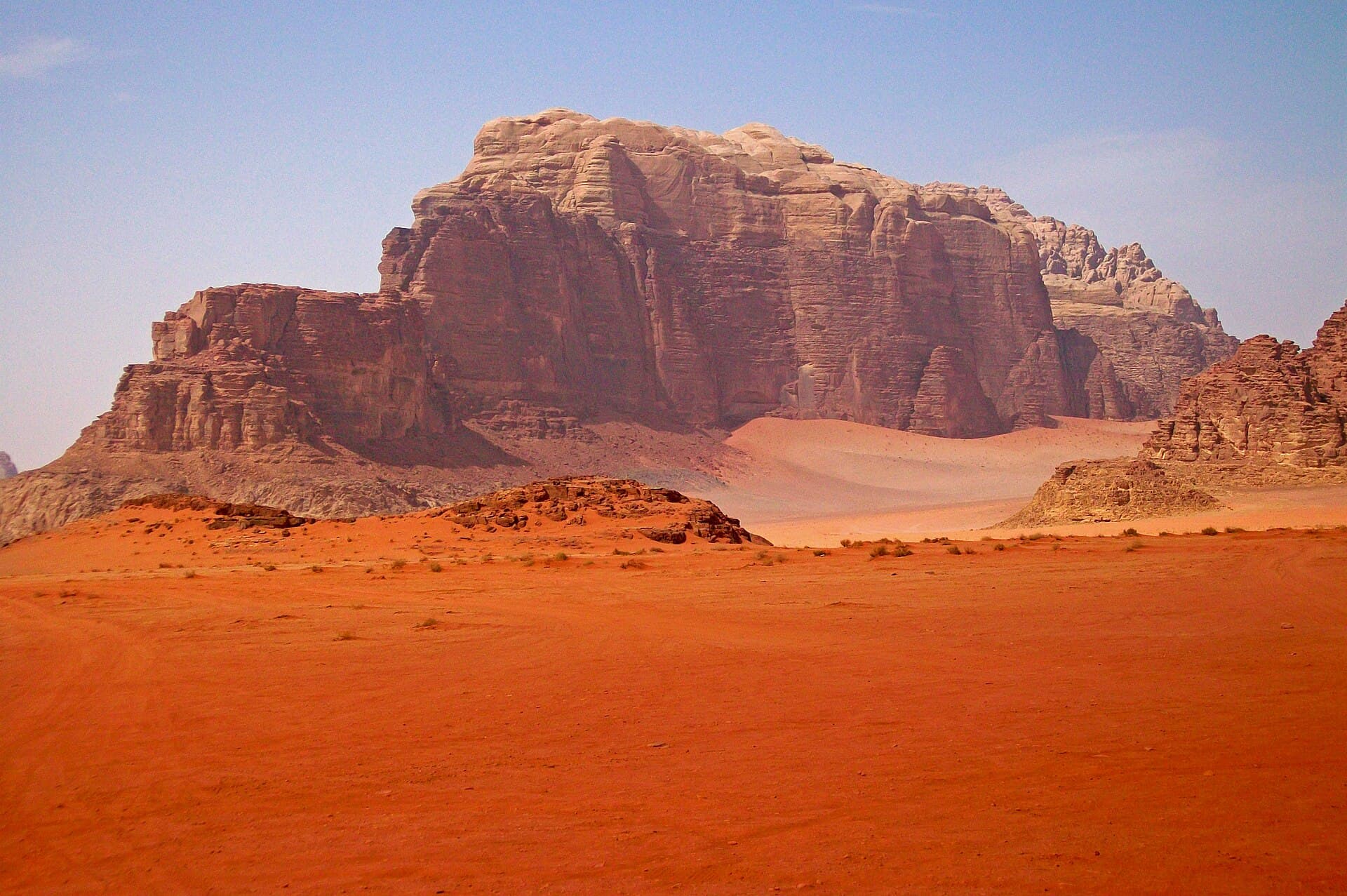
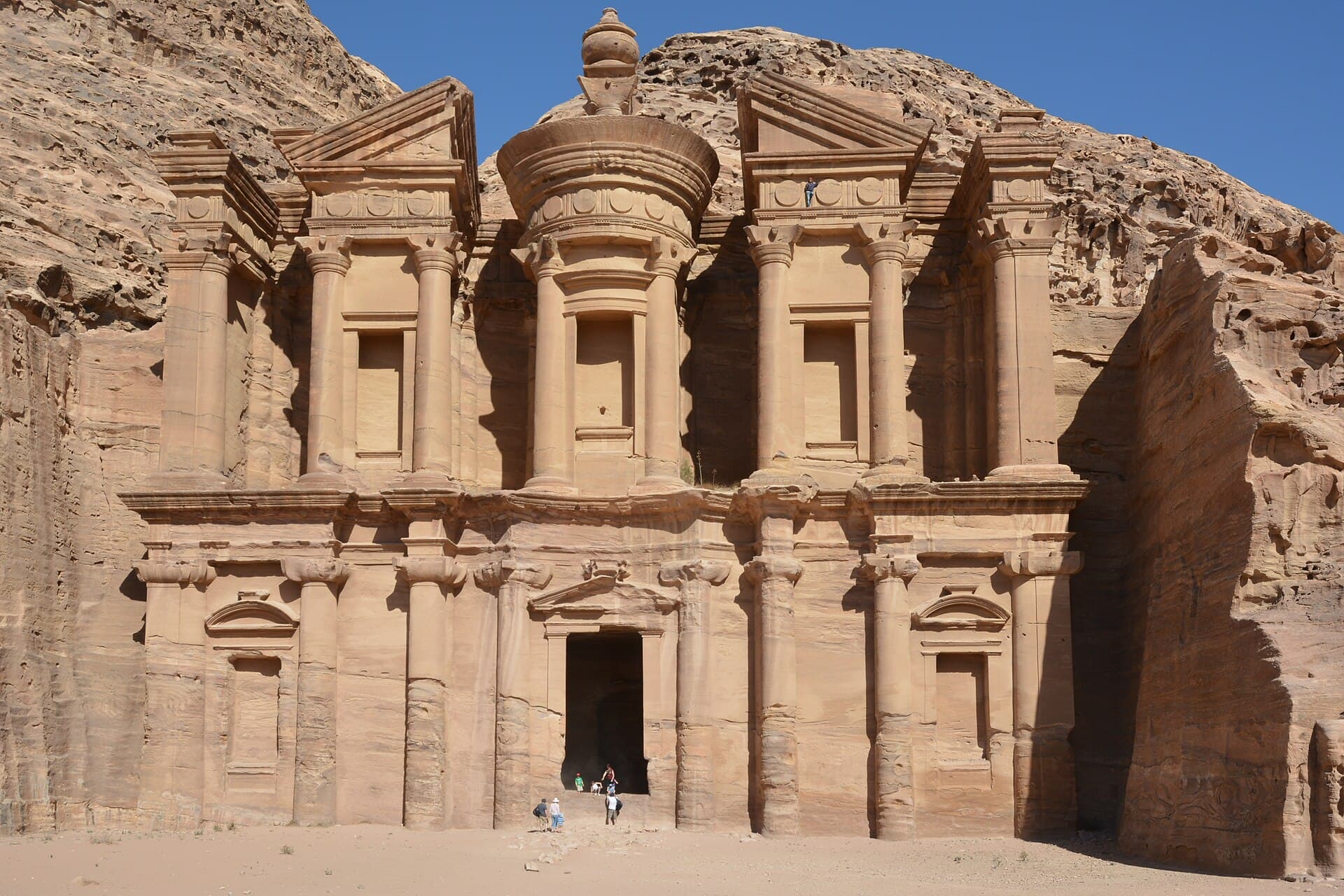
A full day in the rock-cut city, then a night at a Wadi Rum camp.

Your Egypt and Jordan journey begins at Cairo airport, where a representative meets you after immigration and baggage collection. A private transfer takes you into the city and to your hotel. Depending on traffic and the route, you may glimpse the Nile on the way, the river that will carry you for three nights later this week.
Nothing is scheduled for the rest of the day, and that is part of the design. This itinerary includes several flights and a change of country, so starting rested matters. Settle in, recover from your journey and review tomorrow's meeting time with your representative.
If you arrive early, a short walk near the hotel or dinner at a local restaurant is a gentle introduction to the city, far better than squeezing a museum into a travel day. Your representative can help with practical questions such as changing money, buying a local SIM card and what to wear for the sites. It is also worth checking your onward documents now: you will need your passport for each domestic flight and for the cruise check-in, and keeping copies on your phone can save time later.

Begin on the Giza Plateau, where the pyramids of Khufu, Khafre and Menkaure rise at the edge of the Western Desert. They are the oldest of the sights on this trip, built about 4,500 years ago, and your guide explains them as a landscape of royal tombs, temples and causeways rather than three isolated shapes. You walk between viewpoints, with time for questions and photographs.
Then comes the Great Sphinx, carved from the bedrock beside the causeway of Khafre's pyramid. Looking at it from the side shows how much of the original rock the sculptors left in place.
In the afternoon you continue to the Grand Egyptian Museum, a short drive from the plateau, where the history of ancient Egypt is laid out on a grand scale, including the treasures from the tomb of Tutankhamun. On a river journey like this one, the museum is especially useful: it introduces gods such as Horus, Sobek and Amun, whom you will meet again in the temples along the Nile. Specific galleries, admission categories and any pyramid-interior visit depend on the confirmed ticketing plan. You return to your hotel for the evening.


Today you explore the Cairo that grew long after the pharaohs. In the morning you visit a selection of Coptic or Islamic landmarks in the older parts of the city, chosen according to opening times and your interests. Coptic Cairo preserves some of Egypt's oldest churches, while Islamic Cairo is dense with mosques, madrasas and city gates from many dynasties, among them the historic Al-Azhar Mosque.
Later, follow the lanes around Al-Muizz Street, a historic thoroughfare lined with monuments, and continue into Khan el-Khalili, the city's best-known market. Worship, trade and everyday life continue here alongside centuries of architecture, from the call to prayer to the sound of metalworkers' hammers.
Your guide helps distinguish the stories of the places you enter, and time for tea and browsing is part of the day, not an afterthought. Choose a café, order mint tea or Turkish-style coffee and watch the market go by. Dress modestly, with shoulders and knees covered, and carry a scarf for mosque visits. This evening, prepare a small bag for the cruise with sun protection, a light jacket for the deck and anything you will want handy on board.

This morning you leave Cairo on a scheduled flight south to Aswan, Egypt's southernmost city on the Nile, where the river runs between granite boulders and golden sand dunes. Timings are planned so that you can board your cruise ship on its designated embarkation day.
After you settle into your cabin, and if the ship's shore program and arrival time allow, you visit Philae Temple, dedicated to the goddess Isis. The temple stands on an island reached by a short boat ride, and its story is remarkable: when dam construction threatened to submerge it in the 20th century, an international effort moved the whole complex, block by block, to higher ground on Agilkia Island.
Back on board, you have time to enjoy the ship. Watch the feluccas sail past from the sun deck as the light softens over Aswan. Meals on board follow the ship's program as confirmed in your quote. Tonight is your first night on the Nile.
This route uses a three-night sailing northbound from Aswan to Luxor. Embarkation is not available on every calendar date, which is why your travel dates are matched to an actual sailing when your quote is prepared.

Today the river does the work. You sail north through the landscape of Upper Egypt, with palm groves, fields and mud-brick villages lining the banks and desert hills behind them. Shore visits follow the order confirmed by your ship.
Kom Ombo is unusual among Egyptian temples because it is a double temple, with two parallel sanctuaries: one dedicated to Sobek, the crocodile god, and the other to Horus the Elder, a falcon god. Its position right on the riverbank makes it one of the most photogenic stops on any cruise, especially when it is floodlit after dark. A small museum nearby displays mummified crocodiles.
At Edfu you visit the Temple of Horus, one of the most complete temples surviving from ancient Egypt. Built in the Ptolemaic period, it still has much of its roof, giant entrance pylon and long inscriptions describing the rituals once performed inside. Your Egyptologist connects the two sites without treating them as interchangeable.
Keep the afternoon flexible for sailing and possible lock or mooring delays; both the route and meal times follow the actual cruise schedule. Relax on deck and watch rural Egypt glide by. This is your second cruise night.


The river journey reaches Luxor, built on the site of ancient Thebes, once the religious capital of Egypt. Here Karnak and Luxor Temple introduce the ceremonial heart of the ancient city.
Karnak is a vast complex of temples, pylons, courts and obelisks, built and expanded by many generations of pharaohs. Its Great Hypostyle Hall, with towering carved columns, is one of the most impressive spaces in all of Egypt. Your guide explains how the temple worked as the home of the god Amun and the stage for great festivals.
Luxor Temple stands in the center of the modern town, beside the river. Colossal statues of Ramesses II and a single obelisk guard its entrance; its twin once stood here too and now rises in the Place de la Concorde in Paris. Explore the East Bank at a pace that leaves time among the columns and carved gateways.
The timing and order of temple visits are fixed by your vessel's mooring schedule. Return aboard for your third and final cruise night, and enjoy your last evening on the river. Pack tonight, since tomorrow you disembark early.


After breakfast you leave the ship and cross to Luxor's West Bank for a planned selection of sites, typically the Valley of the Kings and the Temple of Hatshepsut. In the Valley of the Kings, pharaohs were buried in rock-cut tombs whose walls are decorated with scenes from the afterlife. Which tombs are open varies, and some require separate tickets; your guide explains the options on the day.
The Temple of Hatshepsut rises in terraces against a dramatic cliff face. Built for one of the few women to rule Egypt as pharaoh, it is one of the most striking pieces of architecture in the ancient world.
In the afternoon you transfer to Luxor airport for the scheduled flight to Cairo, and check into a Cairo hotel for the night. This hotel night is deliberate: it separates the end of the cruise from your international flight to Jordan, so a delay on one does not put the other at risk. If flight times are too tight to fit both sightseeing and the flight, we move part of the West Bank visit to the day before or extend your stay in Luxor. We always check the timetable before confirming both.

Today you change countries. After breakfast you transfer to Cairo Airport for the confirmed flight to Amman. Because you spent last night in Cairo, this connection is calm rather than rushed.
In Amman your Jordanian representative meets you after arrival formalities, and you continue south by private vehicle toward Petra. The road journey usually takes around three hours, crossing the high plateau along the Desert Highway or a similar route. It is a good time to rest after the busy Egypt chapter and to switch your attention from pharaohs to Nabataeans, the trading people who carved Petra.
Check in and leave the evening free. Petra's famous architecture is worth saving for a full morning rather than attempting the site after a long international travel day. Have dinner at the hotel or nearby and prepare for tomorrow's walking: comfortable shoes with good grip, a hat, sunscreen and a refillable water bottle. You will need Jordanian dinars for small purchases and tips, and your guide can tell you where to change money or use a cash machine. If you are curious about Petra by night, ask your representative whether it is running during your stay.
Enter Petra on foot through the Siq, a winding sandstone gorge about a kilometer long, letting the colors and carved water channels tell their own story before the Treasury appears. The gorge narrows and widens, and its walls rise high above you, keeping the path in shade for much of the way.
At the end of the Siq the rock opens and the Treasury, Al-Khazneh, comes into view, carved into the cliff face by the Nabataeans around 2,000 years ago. It is one of the most famous facades in the world, and still breathtaking in person.
Then continue into the wider archaeological city as energy permits. Beyond the Treasury you find the Street of Facades, a rock-cut theater, the Royal Tombs set high into the mountain and the remains of a colonnaded street. The site is much larger than its most photographed facade. Your guide will discuss walking distances, weather, access and whether any additional trail belongs in today's plan, such as the long stepped climb to the Monastery. Wear shoes with good grip and carry water and snacks, as a full day here involves a great deal of walking. You return to your hotel in the late afternoon.
Travel from Petra to Wadi Rum, a drive of under two hours, and meet an authorized local desert operator for a route suited to weather and protected-area rules. After the temples and tombs of the past nine days, this is a day for wide open landscape.
Wadi Rum is a protected desert of towering sandstone and granite mountains, red sand dunes and narrow canyons, recognized by UNESCO for both its natural beauty and its long human history. In a four-wheel-drive vehicle with a Bedouin guide, you may visit rock bridges, ancient inscriptions and dune slopes, depending on the route chosen on the day. The desert is closely tied to the story of T. E. Lawrence and has appeared in many films.
The sandstone formations, shifting light and enormous sense of space reward patient observation. As the sun sets, the cliffs glow red and gold. Check into your desert camp for the evening; camps usually serve a traditional dinner, and what is included is listed in your quote. Night temperatures can drop sharply, especially in winter, so bring a warm layer. The camp standard, vehicle type and exact excursion duration are confirmed in your quote.

Travel north toward Amman via Madaba to view its renowned mosaic map, then continue to Mount Nebo for a landscape and heritage stop. It is a long drive from Wadi Rum, broken up by these two visits.
In Madaba's Church of Saint George, the sixth-century mosaic floor map shows the Holy Land, with Jerusalem drawn in surprising detail. It is the oldest surviving map of the region. The town is known for mosaics in general, and you may see artisans at work in local workshops.
Mount Nebo, a short drive from Madaba, is revered as the place where Moses looked out over the Promised Land. From its summit, the view stretches across the Jordan Valley toward the Dead Sea and, on clear days, much farther. The memorial church holds well-preserved mosaics.
These places add a different historical perspective from Petra's rock-cut architecture and from the temples of the Nile, closing the trip with the story of early Christianity in the region. Settle into the capital afterward, keeping evening plans light. Opening times, accessibility and the selected museum or church entries need confirmation for each departure.

After breakfast, check out at the agreed time and transfer to the departure airport in Amman. Your 12-day journey through Egypt and Jordan ends here.
Please verify flight times, luggage allowance and any visa or exit requirements before travel. Extra hotel time, late check-out or an additional excursion is not included unless it appears in the confirmed booking. If your flight leaves late, let us know when you book and we can suggest what might fit.
The day's schedule is shaped around a comfortable departure rather than new sightseeing. Take a moment to look back on the journey: the pyramids of Giza, the lanes of medieval Cairo, three nights on the Nile from Aswan to Luxor, the tombs of the Valley of the Kings, the Treasury at the end of the Siq, a night under the desert sky in Wadi Rum and the mosaics of Madaba.
Remember that this trip ends in Amman, so your international ticket should depart from Jordan. If you would like to extend your stay, for example with the Dead Sea or the Roman city of Jerash, ask us before booking and we can add nights at the end.
Per person, two sharing. Prices are a starting point; your planner confirms the final price for your dates.
| Two sharing | $3,199 |
| Three sharing | $3,025 |
| Single room | $5,087 |
| Two sharing | $4,007 |
| Three sharing | $3,775 |
| Single room | $6,515 |
October to April is the most comfortable time for Upper Egypt's temples and Jordan's desert sites. Monument visits start early in the morning to stay ahead of the heat.
Bring breathable layers, a sun hat and sturdy shoes with good grip for Petra's paths and Wadi Rum's sand. Cover shoulders and knees for mosques, churches and the Mount Nebo stop.
The pace is active, with early departures and plenty of time on foot. Petra is entered through the Siq on foot, and the site is much larger than its famous Treasury facade.
The itinerary flies Cairo to Aswan for the cruise and Luxor back to Cairo, then Cairo to Amman. A Cairo hotel night after disembarking protects the international connection to Jordan.
Entry visas for Egypt and Jordan are not included. Entry rules depend on your passport and can change, so please check the official source before you travel.
Cards work in most hotels; carry cash for tips and small purchases in each country. Tipping is customary for guides, drivers and cruise staff, and gratuities are not included.
This itinerary uses a three-night northbound sailing from Aswan to Luxor. You fly from Cairo to Aswan to embark and, after disembarking in Luxor, fly back to Cairo. Ships sail on fixed days, so your dates are matched to a real departure when we prepare your quote.
Disembarking in Luxor and catching an international flight on the same day leaves no room for delays. The Cairo hotel night separates the two, so you fly to Amman the next morning relaxed. It also keeps the West Bank visit in Luxor before your domestic flight.
The itinerary includes flights from Cairo to Aswan, from Luxor to Cairo and from Cairo to Amman. Whether they are ticketed by us, and at what times, is shown in your quote; regional fares are confirmed at booking. International flights to Cairo and from Amman are not included.
Visas are not included, and you need entry permission for Egypt and for Jordan. Entry rules depend on your passport and can change, so please check the official source before you travel.
Nile ships typically have cabins with river views, a restaurant, a lounge and a sun deck, often with a small pool. Meals on board follow the ship's program confirmed in your quote, and guided shore visits are timed around mooring. Evenings are relaxed, and watching the riverbanks from the deck is a highlight.
October to April is the most comfortable period for Upper Egypt and Jordan. Aswan and Luxor are very hot in summer, while Wadi Rum and Petra can be cold in winter, especially at night. Spring and fall give the best balance across both countries.
Bring light clothing for the Nile, sturdy shoes for temples, tombs and Petra, a hat, sunglasses and sunscreen. Add a light jacket for evenings on deck and warm layers for the Wadi Rum night. A scarf and clothing that covers shoulders and knees are useful at religious sites.


Photo credits: Petra — Azurfrog / Wikimedia Commons (CC BY-SA 3.0) · Wadi Rum — Daniel Case / Wikimedia Commons (CC BY-SA 3.0) · Madaba & Mount Nebo — Faris El-Gwely / Wikimedia Commons (CC BY-SA 4.0) · Jordan — Mohammad hajeer / Wikimedia Commons (CC BY-SA 4.0)
TALK TO A REAL LOCAL EXPERT
Book a free 30-minute consultation with one of our Egypt specialists. We’ll talk through your ideas, answer your questions and help you plan the perfect trip.
“We are here, plan your Egypt journey with people who know it best.”