
Your dates, not a ship's
Hotel nights in Cairo and Luxor mean departures are not tied to cruise sailing days.
Tour Operator · Egypt, Jordan, UAE, Turkey and Morocco
Giza and Luxor from hotels, then Petra, a Wadi Rum night, and Amman
Cairo to Amman · 10 days
Fly to LuxorDomestic flight
This is a 10-day Egypt and Jordan trip that stays in hotels throughout instead of joining a Nile cruise. It covers Giza and the Grand Egyptian Museum, medieval Cairo, Luxor's East and West Banks, a full day in Petra, a night at a Wadi Rum desert camp, and an evening in Amman. It suits history-minded travelers with fixed dates who want both countries' great sites at an active but organized pace.
Two great ancient civilizations, 10 days, and hotels all the way. This route pairs Egypt's royal monuments with Jordan's rock-cut city without tying your dates to a Nile cruise schedule: you sleep in Cairo for three nights, in Luxor for two, and move on when the plan says so, not when a ship sails.
In Egypt you see Giza and the Grand Egyptian Museum, the medieval heart of Cairo around Al-Muizz Street and Khan el-Khalili, then Karnak, Luxor Temple, the Valley of the Kings, and Hatshepsut's terraced temple. Then the story crosses a border: the Nabataean city of Petra, a night at a camp in the Wadi Rum desert, and a last evening in Amman.
The crossing from Luxor to Jordan may route through Cairo, so it is planned as a dedicated travel day, never squeezed between visits. Because Egypt is hotel-based, departures are more flexible than on cruise-led itineraries, which suits travelers with fixed vacation dates.
Hotel nights in Cairo and Luxor mean departures are not tied to cruise sailing days.

The East Bank temples and the West Bank tombs each get their own day.
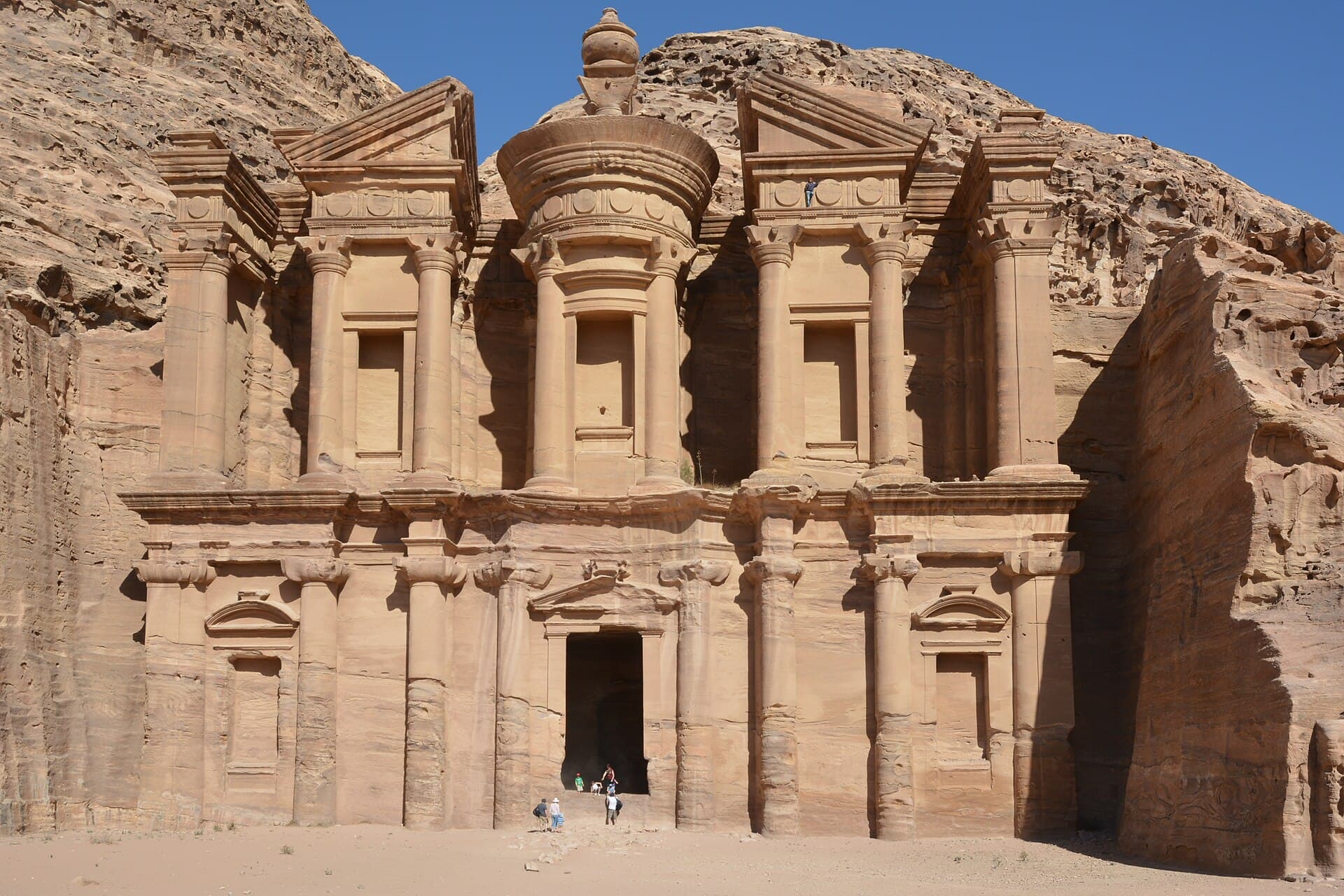
The flight to Amman and the drive to Petra never cut into sightseeing.
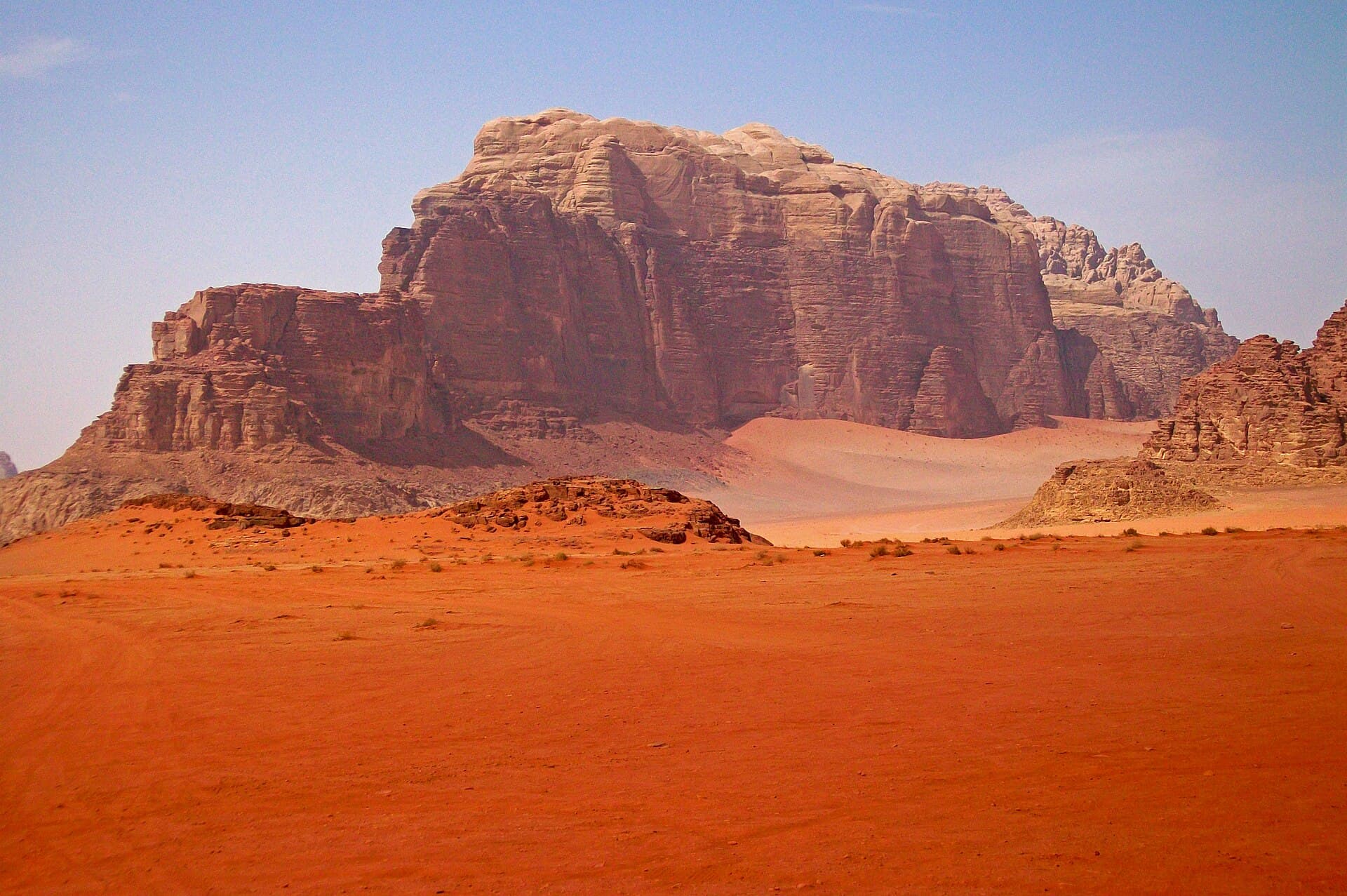
A full day in the Nabataean city is followed by a night at a Wadi Rum camp.

You land in Cairo and are met by our representative once you have cleared immigration and collected your bags. A private vehicle takes you into the city, a drive that can be quick at night or slow in rush hour, which is Cairo's way of introducing itself.
There is no sightseeing today, and that is intentional. The next four days in Egypt are full and the history runs deep, from the Old Kingdom pyramids to the medieval city to the temples of Thebes, so arriving rested makes every guided hour more rewarding. Settle into your hotel, take time to recover from the flight, and review tomorrow's meeting time with your representative.
If you arrive early and want to stretch your legs, a gentle walk or a dinner near the hotel is a better beginning than forcing a major museum into a travel day. It is also a good evening to skim a little background reading: knowing roughly who Khufu, Hatshepsut, and the Nabataeans were turns names into people when you meet them on site. Your representative can answer practical questions about money, phone connections, and what to wear, and confirm the pickup time for Giza.

The day opens on the Giza Plateau, where the pyramids of Khufu, Khafre, and Menkaure form the core of a vast royal cemetery around 4,500 years old. Your guide places them in context: the valley temples and causeways that once linked them to the river, the tombs of the officials who served the kings, and the organization it took to quarry, move, and set millions of stone blocks. You walk between viewpoints rather than seeing the plateau from a bus window.
At the Great Sphinx, carved from a ridge of bedrock the builders left standing, you see how geology and royal ambition worked together, and why the monument is usually linked to Khafre.
In the afternoon you continue to the Grand Egyptian Museum, which gathers objects from across Egypt's long history, including treasures from the tomb of Tutankhamun. With so much on display, your guide builds a route that connects what you saw this morning to the objects in the halls, so the museum becomes the second half of the same story. Specific galleries, admission categories, and any pyramid-interior visit depend on the ticketing plan confirmed for your date.


Today moves forward in time to the city that grew after the pharaohs. In the morning you visit a selection of Coptic or Islamic landmarks in Cairo's older quarters, chosen according to opening times and your interests. A history-minded traveler might trace how Christianity and then Islam reshaped the city; others prefer to focus on architecture, from church icon screens to carved mosque domes.
In the afternoon you follow the lanes around Al-Muizz Street, the old ceremonial spine of medieval Cairo, where mosques, madrasas, fountains, and mansions from several dynasties stand almost wall to wall. The street leads into Khan el-Khalili, the great bazaar that has drawn traders since the late Middle Ages. Worship, trade, and everyday life continue here alongside centuries of architecture.
Your guide helps distinguish the stories of the places you enter, which is not easy where so many periods overlap. Time for mint tea in a historic café and for browsing among lamps, spices, textiles, and silver is part of the day, not an afterthought. Dress modestly, with shoulders and knees covered, and carry a scarf if you want to enter active mosques. Tonight, pack for the early flight to Luxor.


A short domestic flight brings you south to Luxor, the modern city on the site of ancient Thebes, capital of Egypt at the height of the New Kingdom. You check in to your hotel, or drop luggage if rooms are not ready, and then cross into the ceremonial world of the East Bank.
Karnak was the religious heart of Thebes, enlarged by pharaoh after pharaoh for some 2,000 years until it became a city of pylons, obelisks, courts, and sanctuaries. Its Great Hypostyle Hall, with its 134 massive columns, is one of the most powerful spaces surviving from the ancient world. Your guide explains how successive kings used the temple to proclaim their legitimacy.
The Avenue of Sphinxes once carried sacred processions between Karnak and Luxor Temple, and seeing its restored stretches helps you understand the two temples as one ceremonial landscape. Luxor Temple, in the center of town, is graceful and compact, with colossal statues of Ramesses II at its gateway. Visits follow the time and opening arrangements of the day. Tonight is a hotel night in Luxor, not a cruise embarkation, and tomorrow's pace can be adjusted to your arrival time.

You cross the Nile to the West Bank, where the kings and queens of the New Kingdom prepared for eternity. In the Valley of the Kings, royal tombs were cut deep into the limestone hills and decorated with texts and images meant to guide the king through the underworld. Your guide explains how to read the scenes, so the painted corridors become a story rather than decoration.
The tombs open to visitors rotate for conservation, and some, such as Tutankhamun's, require separate tickets. Your guide tells you which are open and helps you choose those that fit your interests.
Next is the memorial temple of Hatshepsut, a female pharaoh whose reign was later partly erased from the record. Its long terraces, set against a sheer wall of cliffs, show architecture working with landscape in a way few ancient buildings do. Reliefs inside record an expedition to the land of Punt.
Then you return to Luxor for an unhurried afternoon. The advantage of a hotel-based plan shows here: you can rest, return to a temple on your own, or watch the sunset over the West Bank. Avoiding extra stops makes the tombs and terraces easier to remember.
This is the day you cross from Egypt to Jordan, and it is planned purely as a travel day. Depending on airline schedules, your flight to Amman may connect through Cairo, so your guide and our operations team time the transfers and connection with room to spare. Whether the flights are ticketed by us is shown in your quote.
In Amman your Jordanian representative meets you after arrival formalities, and you continue south by private vehicle toward Petra. The drive usually takes around three hours, across the high plateau that runs down the spine of the country. A coffee stop on the way is a good moment to switch mentally from pharaohs to Nabataeans, the Arab people whose trading wealth built Petra on the caravan routes between Arabia and the Mediterranean.
You check in to your hotel near Petra in the evening, and the rest of the time is free. Petra's famous architecture is worth meeting for the first time on a full morning with fresh legs, rather than at the end of a long day of airports and roads. Have dinner, confirm the start time with your guide, and prepare walking shoes, a hat, and water for tomorrow.
You enter Petra the way travelers have for 2,000 years, on foot through the Siq. This narrow gorge, about a kilometer (0.6 mile) long, was the ceremonial entrance to the Nabataean capital, and it still carries the remains of the channels that brought water into the city. Your guide points out niches, carvings, and traces of the original paving as the walls close in overhead.
Then the gorge opens onto the Treasury, Al-Khazneh, its classical facade cut directly into the rose-colored cliff. Having seen Egypt's temples this week, you may notice how the Nabataeans blended local, Hellenistic, and Egyptian influences in their architecture.
Beyond the Treasury, the archaeological city spreads across a wide valley: the Street of Facades, a theater carved from the rock, the Royal Tombs high in the cliff, and the colonnaded street leading to the remains of temples. You continue as energy permits; the site is much larger than its most photographed facade, and a full day here involves miles of walking on sand and stone. Your guide discusses distances, weather, and access, and whether an additional trail, such as the climb toward the Monastery, belongs in today's plan.
You travel from Petra south to Wadi Rum, a drive of under two hours, and meet an authorized local desert operator. Wadi Rum is a protected area recognized by UNESCO for both its landscape and its long human history, and visits follow routes suited to the weather and protected-area rules, usually in four-wheel-drive vehicles with Bedouin drivers.
For a history-minded traveler, the desert holds more than scenery. Rock inscriptions and drawings left over thousands of years by ancient peoples, including the Nabataeans you met in Petra, mark the canyon walls, and the region played a part in the Arab Revolt of the early 20th century, the story told in Lawrence of Arabia. Your excursion combines these traces of the past with the sandstone mountains, dunes, and natural arches that make the valley famous.
The shifting light and the enormous sense of space reward patient observation, especially in the late afternoon. You check in to your desert camp for the evening; camps usually serve a traditional dinner, and what is included is set out in your quote. Nights can be cold, so keep a warm layer handy. The camp standard, the vehicle type, and the exact excursion duration are confirmed in your quote.

From the desert you return north to Amman, a long road journey of several hours. Amman is a modern capital with ancient roots: the city spreads across a series of hills, and on the highest of them, the Citadel, you find layers from Roman, Byzantine, and early Islamic times, including the standing columns of a Roman temple and the remains of an Umayyad palace.
Your look at the city is focused rather than exhaustive, chosen according to your arrival time and interests. A citadel visit gives you the long view over the city and its history; a neighborhood walk gives you everyday Jordanian life, with coffee sellers, sweet shops, and busy downtown streets below the Roman theater. Either way, the aim is to see Jordan as a living country as well as a land of famous monuments.
The final evening is at leisure. It is a good time for a farewell dinner of Jordanian dishes and a chance to look back over a journey that has spanned some 4,500 years of history, from the pyramids to the medieval bazaar, from Thebes to the Nabataean capital. Review tomorrow's airport arrangements with your representative before you go to bed.
Your journey ends in Amman. After breakfast you check out at the agreed time, and a private transfer takes you to the airport for your departure.
Please verify flight times, luggage allowance, and any visa or exit requirements before you travel, especially if your route home connects through another country. Extra hotel time, late check-out, or an additional excursion is not included unless it appears in your confirmed booking. If your flight leaves in the evening, tell us when you book and we can suggest whether a short extra visit fits comfortably.
The day is shaped around a comfortable departure rather than new sightseeing. That makes it a good moment to sort photographs, note the names of the tombs you entered and the places you liked most, and think about what you would return for: perhaps Aswan and a Nile cruise in Egypt, or the Dead Sea and the Roman city of Jerash in Jordan.
In 10 days you have stood at the foot of the Great Pyramid, walked the medieval streets of Cairo, entered royal tombs in the Valley of the Kings, followed the Siq to the Treasury, and slept in the Wadi Rum desert. Have a safe journey home.
Per person, two sharing. Prices are a starting point; your planner confirms the final price for your dates.
| Two sharing | $2,659 |
| Single room | $3,799 |
| Two sharing | $3,189 |
| Single room | $4,559 |
October to April is the most comfortable season for Luxor's open-air sites and Petra's long walks. Wadi Rum can be cool after dark, so bring a warm layer for the camp night.
Bring clothes that cover shoulders and knees for the Coptic and Islamic landmarks of historic Cairo, sturdy shoes for archaeological sites and desert terrain, and a hat with sunscreen.
This is an active trip, with early morning starts and significant time on foot through archaeological sites and desert terrain, including the Siq and the wider city at Petra.
A domestic flight takes you to Luxor. Reaching Petra may need a connection via Cairo, so it runs as a dedicated travel day, with a private vehicle from Amman. Check which flights your quote includes.
Entry visas for Egypt and Jordan are not included. Entry rules depend on your passport and can change, so please check the official source for both countries before you travel.
Carry local cash in each country for tips and small purchases, such as tea or a souvenir in Khan el-Khalili. Gratuities, travel insurance, and optional activities are not included.
Nile cruises sail on fixed days, so your dates must fit the ship. Staying in Luxor hotels lets you start on almost any date and keeps the same room for two nights. You miss Aswan, Edfu, and Kom Ombo, which are covered by our cruise-based Egypt and Jordan packages.
You fly from Luxor to Amman on Day 6, often via Cairo depending on schedules, then drive about three hours south to Petra with a private driver. The day has no sightseeing so that a delay does not cost you a visit. Your quote shows whether these flights are included and their routing.
You need entry permission for both countries, and visas are not included in the package. Entry rules depend on your passport and can change, so please check the official source for both countries before you travel.
The tombs open to visitors rotate for conservation, so we cannot promise specific ones in advance. The standard ticket covers a set number of tombs, and some, including Tutankhamun's, need a separate ticket bought on site. Your guide tells you what is open and recommends the best choices.
The pace is active rather than relaxed. Most touring days involve two to four hours on foot, often on uneven ground, and Petra involves several miles. Travelers who walk regularly usually manage well. If you have mobility concerns, tell us before booking so we can shorten visits or adjust the program.
October to April is the most comfortable period for Luxor's open-air sites and Petra's long walks. Spring and fall are especially pleasant. Summer brings intense heat in Luxor, so visits start very early. In winter, Wadi Rum can be cold after dark, so a warm layer is essential.
Pack light, breathable clothes that cover shoulders and knees, sturdy shoes with good grip for tombs and Petra, a sun hat, sunglasses, and sunscreen. Add a warm jacket for the desert night, a scarf for mosques, a small daypack, and a refillable water bottle. Carry some Egyptian pounds and Jordanian dinars for tips.


Photo credits: Petra — Azurfrog / Wikimedia Commons (CC BY-SA 3.0) · Wadi Rum — Daniel Case / Wikimedia Commons (CC BY-SA 3.0) · Jordan — Mohammad hajeer / Wikimedia Commons (CC BY-SA 4.0)
TALK TO A REAL LOCAL EXPERT
Book a free 30-minute consultation with one of our Egypt specialists. We’ll talk through your ideas, answer your questions and help you plan the perfect trip.
“We are here, plan your Egypt journey with people who know it best.”