
Paced for children
Afternoons stay lighter, and guides adapt their explanations to the ages in your group.
Tour Operator · Egypt, Jordan, UAE, Turkey and Morocco
Cairo, Luxor, Petra, and Wadi Rum for families, with rest built into the days
Cairo to Amman · 10 days
Fly to LuxorDomestic flight
This is a 10-day Egypt and Jordan trip planned for families. It covers the Giza pyramids and the Grand Egyptian Museum, a child-friendly Cairo day, Luxor's temples and royal tombs, Petra, a night at a Wadi Rum desert camp, and a gentle last evening in Amman. The pace is moderate, with rest built in, but families should expect uneven paths, some early starts, and two long travel days.
This 10-day Egypt and Jordan trip is built around one question: what will a family actually enjoy, and still remember years later? The answer is a short list of places, with breathing room between them. You see the pyramids, the Sphinx, and the Grand Egyptian Museum, spend a slower Cairo day designed around children's attention spans, then fly to Luxor for temples, royal tombs, and an unhurried afternoon.
In Jordan the adventure gets more physical. You walk the Siq into Petra together, continue only as far as small legs allow, then trade stone for sand at a desert camp in Wadi Rum, where most children decide this is the best moment of the trip. A final night in Amman lets everyone wind down before the flight home.
Long travel days are kept light on sightseeing, and guides adapt their explanations to the ages in your group. Family rooming, camp facilities, walking demands, and any age limits for activities are confirmed in your quote before you book.
Afternoons stay lighter, and guides adapt their explanations to the ages in your group.

A museum with objects children connect with, a short walk, and a relaxed lunch.
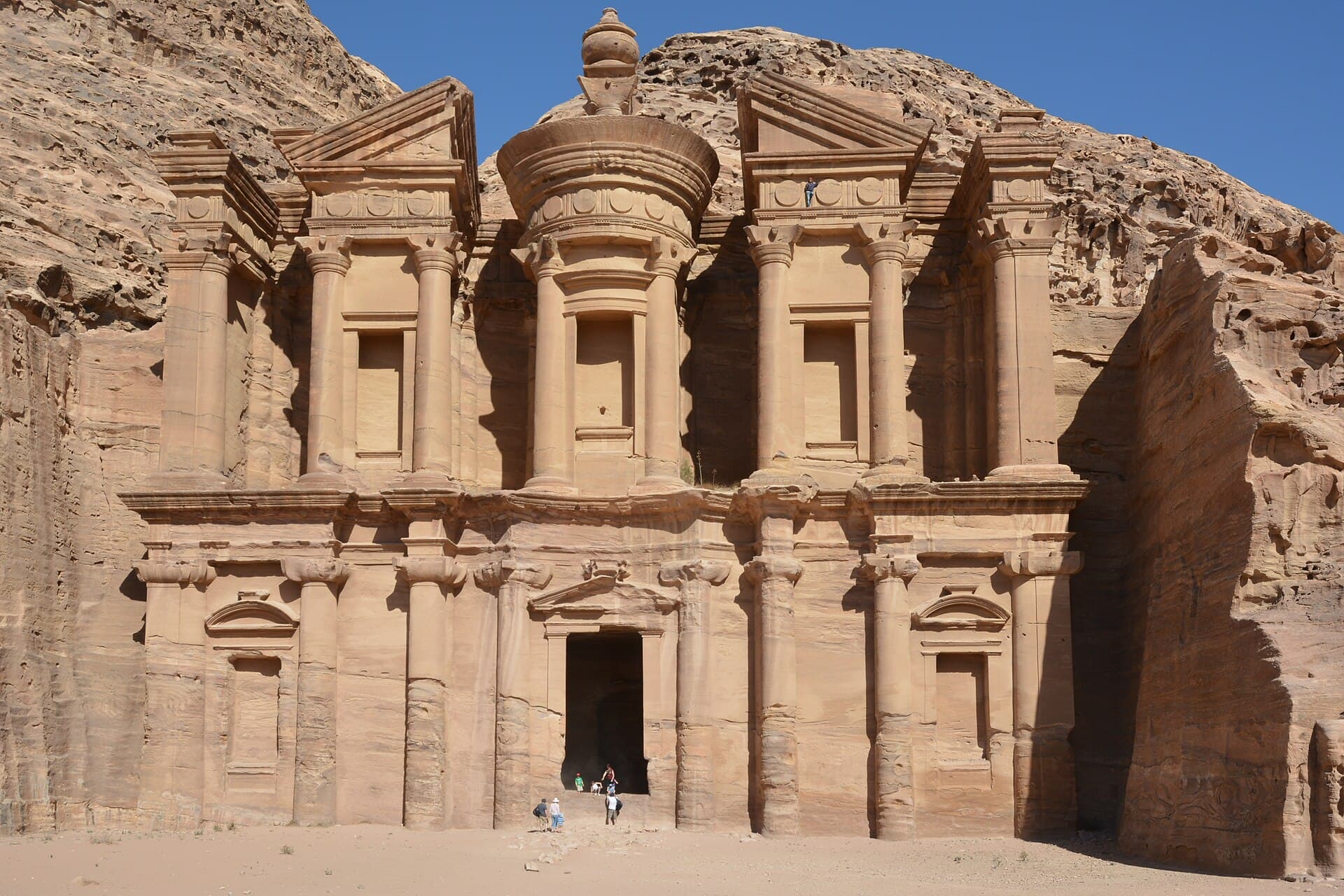
You walk the Siq to the Treasury and go further only as far as everyone wants to.
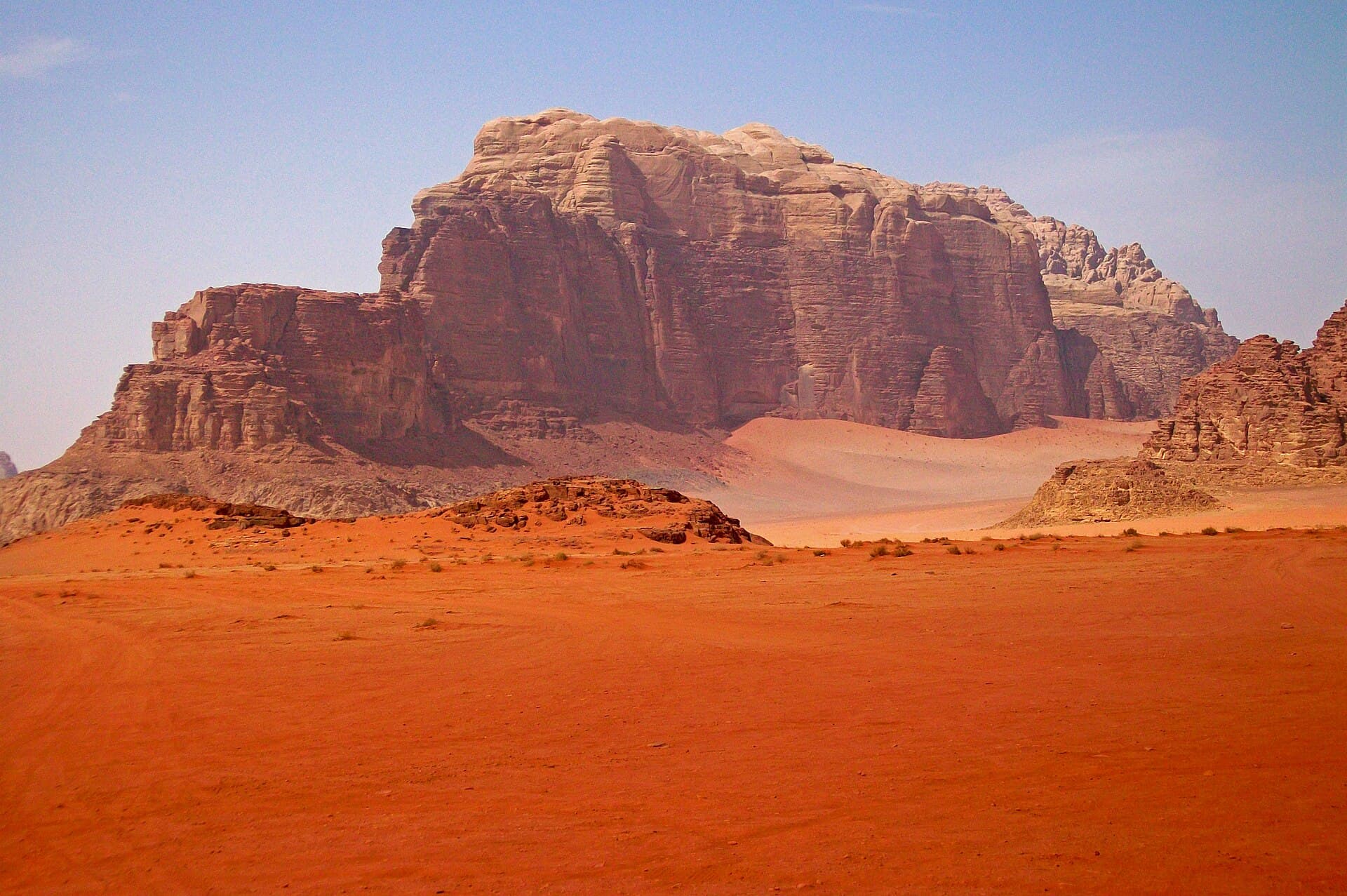
Dunes to run down, a jeep ride, and stars over the Wadi Rum camp.

Arriving with children after a long flight is tiring for everyone, so Day 1 asks nothing of you. Your representative meets the family after immigration and baggage collection, helps with the luggage trolley, and walks you to a private vehicle for the ride into Cairo.
The journey is a first adventure in itself. Children usually notice the traffic, the horns, the minarets rising between buildings, and perhaps the river as you cross it. Point out the Nile now: they will see it again in Luxor and it helps them understand how the whole trip connects.
At the hotel, settle in, let little ones sleep if they need to, and review tomorrow's meeting time. If you arrive early and everyone still has energy, a short walk or an early dinner near the hotel is a better beginning than squeezing a museum into a travel day. Your representative can suggest a simple restaurant with familiar options for fussy eaters. Before bed, lay out hats, sunscreen, water bottles, and comfortable shoes for the morning, and charge any tablets or cameras: tomorrow is pyramids day, and children tend to remember the first sight of them for a long time.
Today starts on the Giza Plateau, where the pyramids of Khufu, Khafre, and Menkaure stand at the edge of the desert. For children the first surprise is the size of the blocks; standing next to the base of the Great Pyramid makes the numbers in books suddenly real. Your guide walks you between viewpoints at a family pace, with time for questions and photographs, and explains the pyramids as part of a royal burial landscape rather than three isolated shapes.
At the Great Sphinx, the lion's body and human head spark plenty of questions about who carved it and why its nose is missing. A good guide turns those questions into stories rather than lectures.
In the afternoon you continue to the Grand Egyptian Museum, a short drive away. Instead of trying to see everything, the visit focuses on a few showpieces that hold children's attention, such as giant royal statues and objects from Tutankhamun's tomb. Breaks for snacks and rest are part of the plan. Specific galleries, admission categories, and any pyramid-interior visit depend on the ticketing plan confirmed for your date. You are back at the hotel in time for a quiet evening.

Today is designed around how families really travel: shorter blocks of sightseeing, more breaks, and space for curiosity. The day mixes a museum visit with a neighborhood walk, and your guide adjusts both to the ages in your group.
In the museum, the focus is on objects children can connect with: jewelry, tools, games, model boats, and everyday items that show how people lived thousands of years ago. Ask your guide to set a challenge, such as finding a particular animal god or a cat in the displays; it keeps younger travelers engaged.
Later you take a short walk in a historic quarter, with the lanes of Khan el-Khalili offering lanterns, spices, brassware, and craftspeople at work. It is a good place for children to practice a few words of Arabic and choose a small souvenir. Lunch is relaxed rather than rushed, and the afternoon ends early so everyone can rest before tomorrow's flight.
Stroller access and the number of steps at individual sites vary, so tell us your children's ages and any mobility needs when you request a quote. The final program is shaped around them.


After breakfast you transfer to the airport for a short domestic flight south to Luxor, the city that grew over ancient Thebes. Flying keeps this travel day short, which matters more with children than with adults.
Once you have checked in or dropped your luggage at the hotel, you visit the East Bank temples as time and opening arrangements allow. Karnak is a vast complex built and rebuilt over many centuries, and its forest of giant columns is one of the places where children really grasp how big ancient Egypt was. Encourage them to stand between the columns and look up.
The Avenue of Sphinxes connects Karnak with Luxor Temple, and walking even part of it helps everyone picture the processions that once moved between the two temples. Luxor Temple sits in the middle of the modern city, and its colossal statues and obelisk at the entrance are especially striking as the light softens in the late afternoon.
This is a hotel night in Luxor, not a cruise, which gives families the comfort of a fixed room and, at many hotels, a pool to cool off in. Tomorrow's start time can be adjusted to your arrival and to how tired everyone feels.


An early start is worth it today, because Luxor's West Bank is hot and open and the morning is the most comfortable time. You cross the Nile to the Valley of the Kings, where pharaohs of the New Kingdom were buried in tombs cut deep into the hillside. Going underground along a painted corridor is often a favorite moment for children; the colors are surprisingly bright.
The selection of tombs open to visitors changes, and some, such as the tomb of Tutankhamun, need separate tickets. Your guide explains what is open on the day and helps you choose.
Next you visit the memorial temple of Hatshepsut, built in terraces against a wall of cliffs. The story of a woman who ruled as pharaoh tends to fascinate children, and the setting is spectacular for photos.
Then the pace drops on purpose. You return to Luxor for an unhurried afternoon, so that the painted chambers and terraces are remembered rather than blurred by too many extra stops. Children can swim or nap, and parents can enjoy a quiet drink by the river. Tonight, pack for Jordan: tomorrow is a long travel day, and you will want snacks and entertainment within reach.

Today you change countries. You fly from Egypt to Amman on your flight, which may connect through Cairo depending on schedules, and the day is planned around travel rather than sightseeing. With children, it helps to keep snacks, water, a change of clothes, and something to do in your carry-on.
In Amman your Jordanian representative meets you after arrival formalities, and you continue south by private vehicle to Petra. The road journey usually takes around three hours, with a break on the way for the restroom and a stretch. Watch the landscape change from city to high plateau and desert; it is a good moment to tell the children about the Nabataeans, the people who carved Petra out of the rock.
You check in to your hotel near Petra in the evening, and the rest of the time is free. However curious everyone is, the first view of Petra is worth saving for a fresh morning rather than a tired evening after a full day of airports and roads. An early dinner and early night set you up well for the walking ahead. Lay out sturdy shoes, hats, and refillable bottles before bed.
This is the big walking day, and your guide paces it around the family. You enter Petra on foot through the Siq, a winding gorge about a kilometer (0.6 mile) long with rock walls rising high above you. Children often love spotting shapes in the rock, the carved channels that once carried water, and the shifting colors of the stone.
Then comes the moment everyone has been waiting for: the gorge opens and the Treasury, Al-Khazneh, appears, carved directly into the cliff about 2,000 years ago. Give everyone time to take it in and to photograph it.
Beyond the Treasury, Petra continues for miles, with a theater cut from the rock, royal tombs in the mountainside, and the remains of a city center. You continue into this wider archaeological city as family energy allows. The site is much larger than its most photographed facade, and your guide discusses walking distances, heat, shade, and the way back before you decide how far to go. Remember that every step in is a step out again. Rest stops and snacks are part of the plan, and an early return to the hotel is perfectly fine if small legs are tired.
Today trades rock for sand. You travel from Petra to Wadi Rum, a drive of under two hours, and meet an authorized local desert operator. Wadi Rum is a protected area, and visitors explore it with local guides, usually in four-wheel-drive vehicles; children tend to love riding in the back and watching the mountains roll past.
The route is chosen to suit the weather and protected-area rules. Expect towering sandstone mountains, red dunes that are fun to run down, narrow canyons, and rock carvings left by ancient travelers. The enormous sense of space is something children rarely experience, and it rewards stopping, looking, and listening.
By late afternoon you reach your desert camp. Sunset turns the cliffs red and orange, and after dark, away from city lights, the stars are spectacular; it is a perfect moment to find constellations together. Evenings can turn cold quickly, especially in winter, so pack warm layers for everyone in a day bag. The camp standard, the type of tent or room, the bathroom arrangements, the vehicle, and the length of the excursion are confirmed in your quote, which is especially important when you are traveling with younger children.

After a morning in the desert you return north to Amman, a long road journey of several hours, so plan books, games, or downloaded movies for the drive. Rest stops break up the trip.
In the capital you have a focused look at the city, chosen according to your arrival time and the family's energy. One option is the Amman Citadel, on a hilltop above downtown, where the columns of a Roman temple stand next to later ruins and the views over the city's hills are wide. Another is a neighborhood walk, where children can see everyday Jordanian life, try local sweets or watch bread being baked.
The aim is not an exhaustive city tour after a long drive but a gentle last chapter that shows Jordan as a living country as well as a land of monuments. The evening is free for a farewell dinner, and many families use it to talk about favorite moments: the pyramids, the tombs, the Siq, the desert stars. Review tomorrow's airport arrangements with your representative, and pack souvenirs carefully. If your flight is early, prepare passports and documents tonight.
The trip ends with a relaxed departure from Amman. After breakfast there is time to pack and check out at the agreed time, and your driver takes the family to the airport for your flight home.
Before leaving, please verify flight times, luggage allowance, and any visa, exit, or transit requirements for every passport in your group. Children's documents in particular are worth checking well in advance. Extra hotel time, late check-out, or an additional excursion is not included unless it appears in your confirmed booking, so mention your flight time when you book and we can suggest what is realistic.
The day is shaped around a comfortable departure rather than new sightseeing. Families often find that the gentle pace of this last morning helps after a busy 10 days. Keep some snacks and water in your carry-on, and a little local currency for small purchases at the airport if you like.
Over 10 days your family has walked among the pyramids, gone underground into a pharaoh's tomb, followed a hidden gorge to a city carved in stone, and slept in the desert. That is a lot of stories to take home, and children tend to keep telling them for years.
Per person, two sharing. Prices are a starting point; your planner confirms the final price for your dates.
| Two sharing | $2,659 |
| Single room | $3,799 |
| Two sharing | $3,189 |
| Single room | $4,559 |
Heat can make outdoor visits tiring in Luxor, Petra, and Wadi Rum. October to April is the most comfortable season, and desert evenings at the camp can turn cool, so pack a warm layer.
Bring light clothes that cover shoulders and knees for mosques and historic quarters, sturdy closed shoes for Petra's stone paths and sand, and hats and sunscreen for the whole family.
Expect several early starts and walking on sand and stone, especially through the Siq at Petra. You continue past the Treasury only as far as family energy allows; breaks and lighter afternoons help.
Flights link Cairo to Luxor and then on to Amman, and a private vehicle continues to Petra. Longer travel days are kept light on sightseeing. Check which flights your quote includes.
Entry visas for Egypt and Jordan are not included. Entry rules depend on your passport and can change, so please check the official source for both countries before you travel.
Carry local cash in each country for tips, snacks, and small purchases; cards work in most hotels. Gratuities, travel insurance, and optional activities are not included.
It works best for school-aged children who can walk a few miles and cope with some early starts, typically from around seven or eight upward. Younger children can travel too, but Petra, the Valley of the Kings, and the long road days are harder with toddlers. Tell us everyone's ages and we will advise honestly.
A light, folding stroller helps at airports and hotels, but it is of limited use at Giza, in the tombs, along the Siq, and in the desert, where ground is sandy, rocky, or stepped. A child carrier is usually more practical at the sites. Your guide can also adjust routes to avoid the most demanding sections.
Every traveler, including children, needs a valid passport and entry permission for both Egypt and Jordan, and visas are not included. Entry rules depend on your passport and can change, so please check the official source for both countries for each family member before you travel.
You fly from Luxor to Amman on Day 6, often with a connection in Cairo, and a private vehicle then drives you about three hours to Petra. That day has no sightseeing. Whether the flights are ticketed by us is shown in your quote, and we time connections with children in mind.
Many hotels offer family rooms or connecting rooms, and we confirm the rooming for each night in your quote. Wadi Rum camps vary from simple tents with shared bathrooms to tents or domes with private facilities. With young children we usually suggest a camp with private bathrooms and warm bedding for cold nights.
Many families travel in spring or fall school breaks, which are usually comfortable in both countries, and in the winter break, when days are pleasant but desert nights are cold. Summer is very hot in Luxor and Petra, so if school calendars leave no choice, we schedule visits early and keep afternoons for rest.
Sun hats, high-SPF sunscreen, sunglasses, refillable water bottles, and broken-in shoes with good grip matter most. Add warm layers for the desert night and air-conditioned vehicles, a small first-aid kit, wet wipes, snacks from home, and entertainment for flights and long drives. Modest clothing for everyone helps at religious sites.


Photo credits: Petra — Azurfrog / Wikimedia Commons (CC BY-SA 3.0) · Wadi Rum — Daniel Case / Wikimedia Commons (CC BY-SA 3.0) · Jordan — Mohammad hajeer / Wikimedia Commons (CC BY-SA 4.0)
TALK TO A REAL LOCAL EXPERT
Book a free 30-minute consultation with one of our Egypt specialists. We’ll talk through your ideas, answer your questions and help you plan the perfect trip.
“We are here, plan your Egypt journey with people who know it best.”