Cairo · Egypt
Coptic Cairo
Continue your trip
Tour Operator · Egypt, Jordan, UAE, Turkey and Morocco
Cairo · Egypt
Continue your trip
TALK TO A REAL LOCAL EXPERT
Book a free 30-minute consultation with one of our Egypt specialists. We’ll talk through your ideas, answer your questions and help you plan the perfect trip.
“We are here, plan your Egypt journey with people who know it best.”
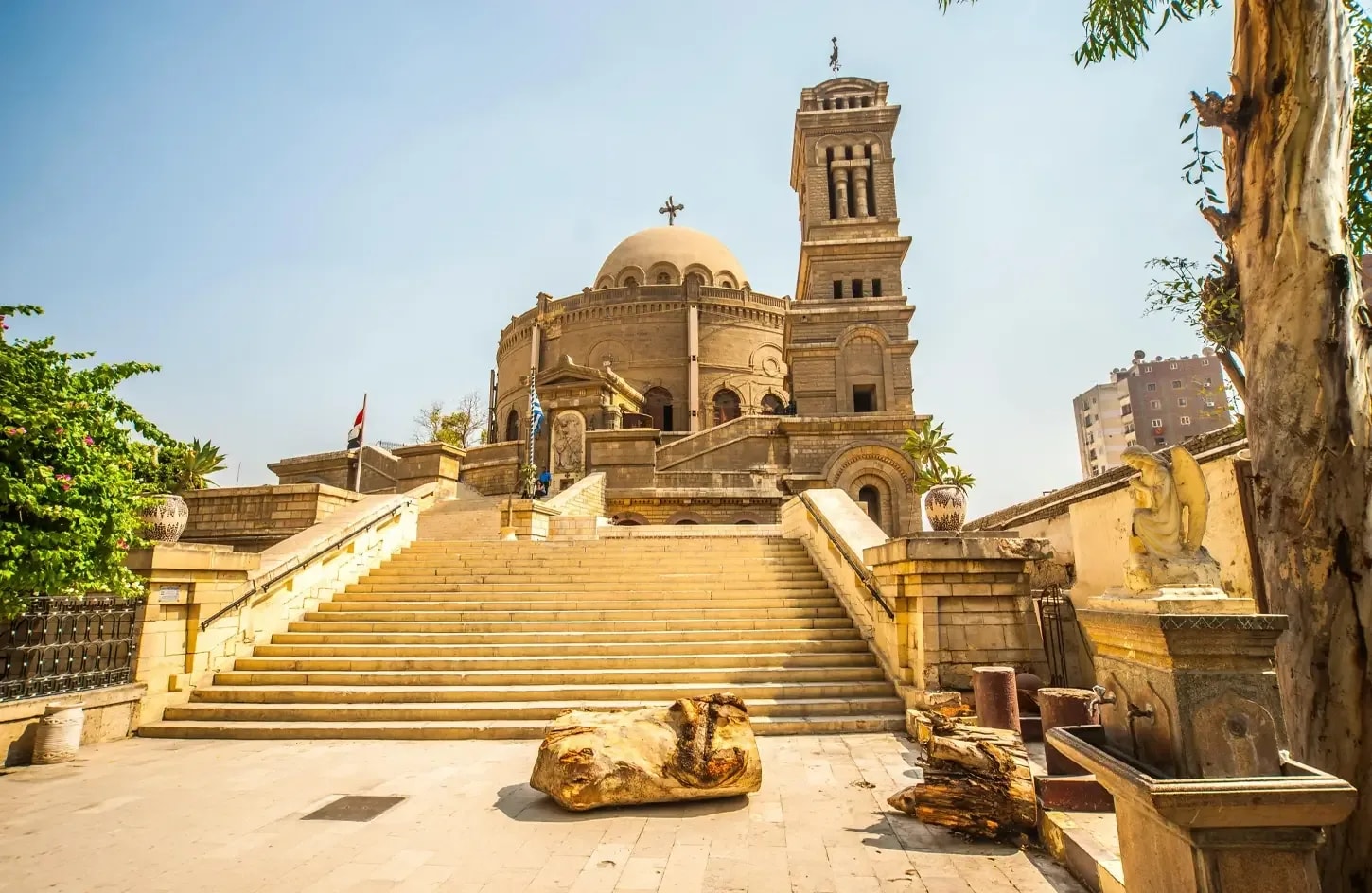
Coptic Cairo is a compact historic quarter in Old Cairo, built in and around the walls of the Roman fortress of Babylon. Within a few narrow lanes you find some of Egypt's oldest churches, a historic synagogue, the Coptic Museum and, close by, one of the earliest mosques in the country.
It matters because it holds the story of Christianity in Egypt, one of the oldest Christian communities in the world, along with deep Jewish and Islamic roots in the same few streets. Egypt's Copts still worship here, so this is a living religious quarter as well as a historic site, and on a Sunday morning you will hear hymns sung in Coptic, the last stage of the ancient Egyptian language.
For many travelers it is a peaceful part of a Cairo stay. The lanes are closed to traffic, the churches are cool and dim, and the scale is human after the vast monuments of Giza.
The Romans built the fortress of Babylon on what was then the bank of the Nile, guarding the river crossing and the canal that linked it to the Red Sea. The fortress was strengthened in the Roman imperial period, and parts of its round towers and walls still stand, now well below modern street level. Since then the river has shifted west, leaving the fortress inland.
Churches grew up inside and against the fortress during the early Christian centuries, and many were rebuilt over time after fires, floods and changes of fortune. Christian tradition holds that the Holy Family sheltered here during their flight into Egypt, and the quarter has long been a place of pilgrimage on the route that tradition traces through the country.
After the Arab conquest in the seventh century, the Byzantine garrison at Babylon surrendered, and the new capital of Fustat grew up beside the fortress. The Mosque of Amr ibn al-As was founded there in the 640s. In the medieval period the Coptic patriarchs came to reside in Cairo, and the Hanging Church served for a time as their seat. Jewish life in the quarter centered on the Ben Ezra Synagogue, whose hidden storeroom later became one of the great finds of modern scholarship.
The quarter is full of layers you can read once you know where to look. At the Hanging Church, the name itself is the clue: the nave sits over a passage of the fortress gate, which is why the building feels raised above the lane. Its wooden roof is often said to recall the shape of Noah's Ark, a common image in Coptic churches.
Coptic church art is distinctive. Look for the iconostasis, the screen that separates the sanctuary from the nave, often made of wood inlaid with ivory and bone in geometric patterns, and for icons of saints, many of them local Egyptian martyrs. Crosses woven into the patterns are a reminder of how the craft traditions of Egypt carried on into the Christian period.
In the Coptic Museum, early textiles show figures and motifs from the classical world beside Christian symbols, a sign of how gradually the culture of Egypt changed.
The quarter also holds historic cemeteries, Christian and Jewish, and small convents tucked behind high walls. Many of the lanes were paved and restored in recent decades, but the scale, the brick walls and the low doorways still give a sense of how this enclosed community lived around its churches.
The quarter is easy to reach by Cairo metro: Mar Girgis station on Line 1 is right outside, and the round tower of the Church of St. George is the first thing you see as you leave the platform. By car it is about 15 to 20 minutes from downtown Cairo, depending on traffic. Once you arrive, everything is on foot through the old lanes.
Plan around three hours to see the churches, the synagogue and the Coptic Museum without rushing, and add an hour if you want to include the Mosque of Amr ibn al-As.
Most of the visit is indoors or in shaded lanes, which makes it a comfortable choice in summer. Mornings tend to be quieter than afternoons. Sunday mornings and religious holidays, especially Coptic Christmas in January and Easter, are busy with worshippers. Visit on another day if you want quieter churches. Check current opening hours and ticket prices for the Coptic Museum before you go; the churches are generally free to enter but may close to visitors during services.
Coptic Cairo pairs well with the nearby National Museum of Egyptian Civilization in Fustat, where the royal mummies are displayed, making a full day in Old Cairo. The Mosque of Amr ibn al-As is within walking distance, and the Nilometer on the southern tip of Roda island, used for centuries to measure the height of the annual flood, is a short drive away.
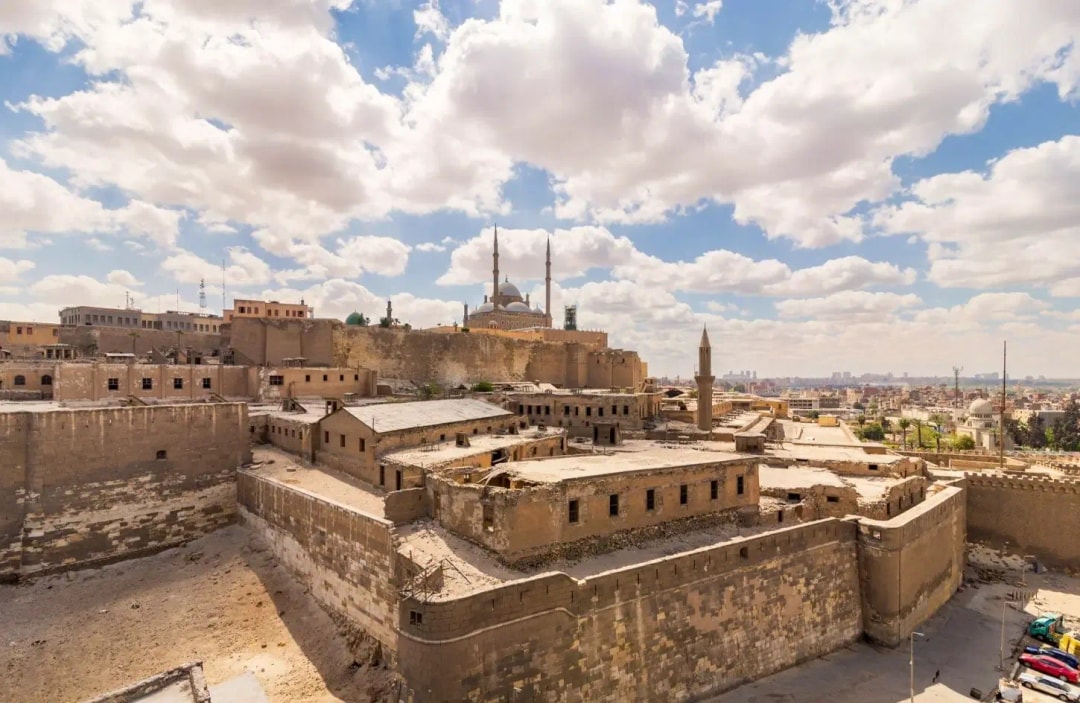
If you have an afternoon free, the Citadel of Saladin and the mosques of Islamic Cairo are about 20 minutes away by car.
Yes. The quarter is well policed, with security checks at its entrances, and it receives a steady flow of visitors and local worshippers. Take the same care with belongings as anywhere in a busy city.
Yes. Visitors of every faith are welcome as long as they dress modestly and behave respectfully. During services, stay at the back or come back later.
It is a huge collection of medieval documents found in the storeroom of the Ben Ezra Synagogue. Most of it is now held by libraries abroad, but the synagogue remains the place where it was preserved for centuries.
Christian tradition places one of their resting places in the crypt of the Church of Saints Sergius and Bacchus, known as Abu Serga. It is one of several sites in Egypt linked to the Holy Family's journey.
The quarter is small enough to explore alone, but a guide helps you read the churches, the iconography and the layers of history, which are easy to miss without context.
Coptic Cairo gives a Cairo itinerary its quieter, spiritual chapter, and it sits easily beside a morning at the pyramids or a day in the Islamic city.