Cairo · Egypt
Citadel of Saladin
Continue your trip
Tour Operator · Egypt, Jordan, UAE, Turkey and Morocco
Cairo · Egypt
Continue your trip
TALK TO A REAL LOCAL EXPERT
Book a free 30-minute consultation with one of our Egypt specialists. We’ll talk through your ideas, answer your questions and help you plan the perfect trip.
“We are here, plan your Egypt journey with people who know it best.”
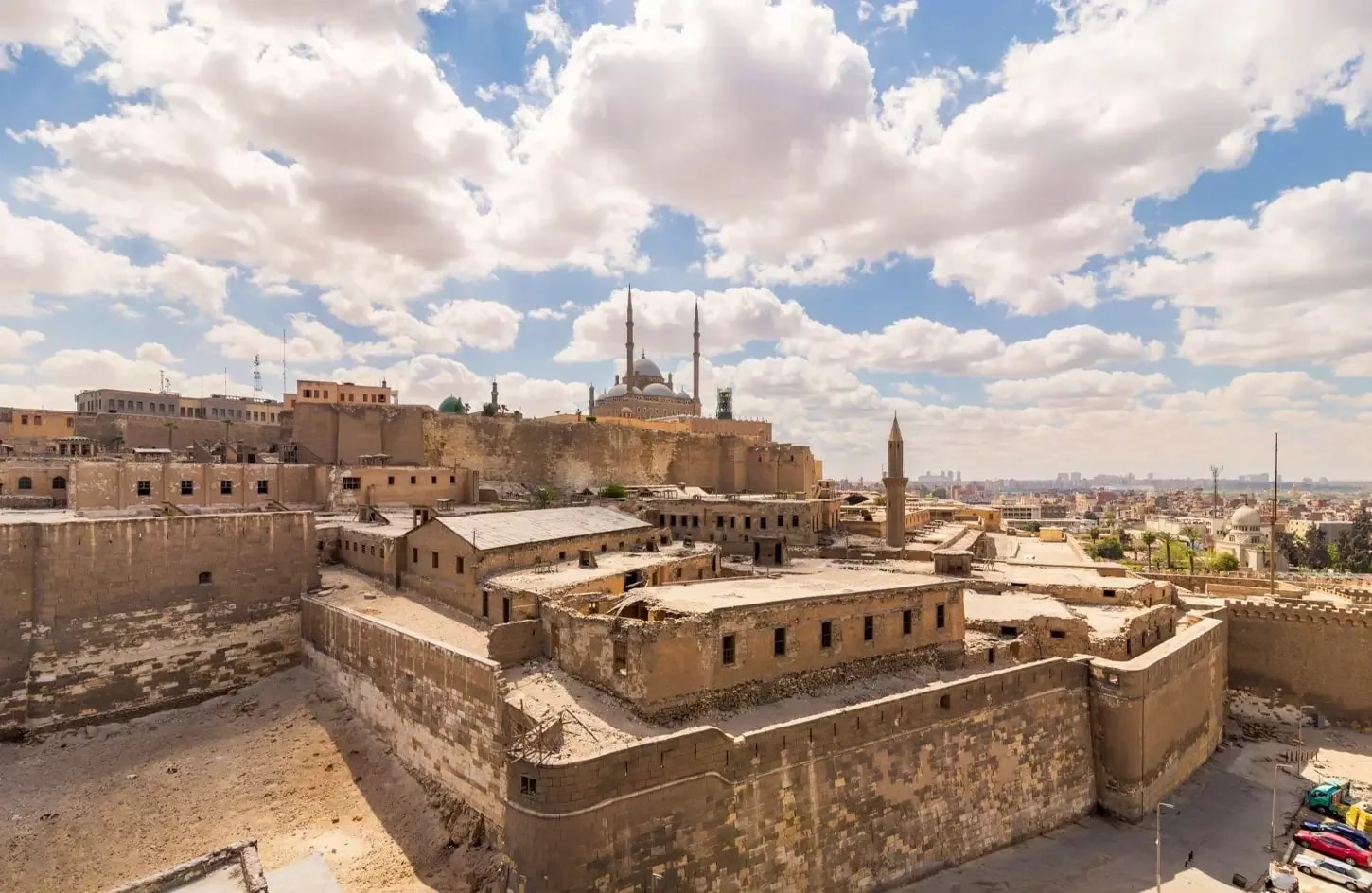
The Citadel of Saladin is a medieval fortress on a spur of the Muqattam Hills, overlooking the historic heart of Cairo. Inside its walls are mosques, palaces and museums, and from its terraces you get a wide view of the city, across a sea of domes and minarets toward the Nile.
For roughly seven centuries it was the seat of Egypt's rulers, from Saladin's successors through the Mamluk sultans and the Ottoman governors to Muhammad Ali and his family. Walking through it, you see how power in Cairo changed hands, each ruler leaving a building in their own style, from austere medieval walls to the Ottoman domes that now define the skyline.
The Citadel is part of Historic Cairo, the UNESCO World Heritage Site that covers the medieval city. It is a good place to begin a day in Islamic Cairo, because from its walls you can see much of what you will visit afterward.
Salah al-Din, known in the West as Saladin, began the fortress in the 1170s, soon after he ended Fatimid rule in Egypt. He wanted a stronghold that could defend both Cairo and the older city of Fustat, and the high ground of the Muqattam gave him a commanding position. His successors completed it, and his nephew al-Kamil made it the royal residence in the early thirteenth century.
The Mamluk sultans, who ruled Egypt from the mid-thirteenth century until the Ottoman conquest of 1517, filled the Citadel with palaces, barracks and mosques. Sultan al-Nasir Muhammad was one of its great builders in the fourteenth century. The Ottomans kept it as the seat of their governors, and added buildings of their own.
In the early nineteenth century Muhammad Ali, the Ottoman governor who founded Egypt's last royal dynasty, transformed the Citadel. In 1811 he invited the leading Mamluk beys to a ceremony here and had them killed as they passed through a narrow lane, ending their power for good. He later cleared many older buildings and replaced them with his own palaces and his great mosque. The rulers' residence moved down to Abdeen Palace in the city later that century, and the Citadel became largely military before opening to visitors as a historic site.
Look at the walls and towers as you arrive. The northern enclosure, the military part of the fortress, keeps much of its medieval masonry, and some towers show the round shape typical of Saladin's era, while others were rebuilt later. The southern enclosure held the royal palaces.
One of the Citadel's engineering works is the deep well cut down through the rock in Saladin's time, known as Bir Yusuf, or Joseph's Well, after Saladin's personal name, Yusuf. It supplied water to the fortress during sieges. Access has varied over the years, so ask on site whether it can be seen.
The Muhammad Ali Mosque is worth studying from both inside and out. Its plan, a central dome surrounded by half domes, is a classic Ottoman arrangement, and it was a deliberate statement: a ruler who saw himself as the equal of the sultan in Istanbul chose the Istanbul style rather than the local Mamluk tradition.
The view from the terraces is a lesson in Cairo's history in its own right. Below you to the west lies the medieval city, with the great Mamluk mosques closest to the walls, and beyond it the modern city stretches to the Nile. To the south and east, the cemeteries often called the City of the Dead spread along the foot of the hills.
The Citadel sits above Salah al-Din Square, on the eastern edge of Islamic Cairo. There is no convenient metro stop, so you will usually arrive by car or taxi, entering from the road that climbs around the fortress. From downtown Cairo the drive takes about 20 to 30 minutes, depending on traffic. Most of our guests come with a driver and guide, which makes it easy to continue to the mosques in the square below or to the bazaar.
Plan about two hours to see the main mosques, a museum and the views. If you want to explore the military museum and the palace properly, allow three.
Much of the visit is outdoors on open terraces with little shade, so in summer go early in the morning or later in the afternoon. The afternoon gives softer light on the city below, but leave enough time before closing. Clear days, more common in winter and after wind or rain, give the best views. Check current opening hours and ticket prices before you go, and note that individual museums inside may keep their own hours.
The Citadel pairs naturally with the Mosque-Madrasa of Sultan Hassan and the al-Rifai Mosque, which face each other in the square below. Sultan Hassan is one of the great monuments of Mamluk architecture, and al-Rifai holds the tombs of members of Egypt's royal family.
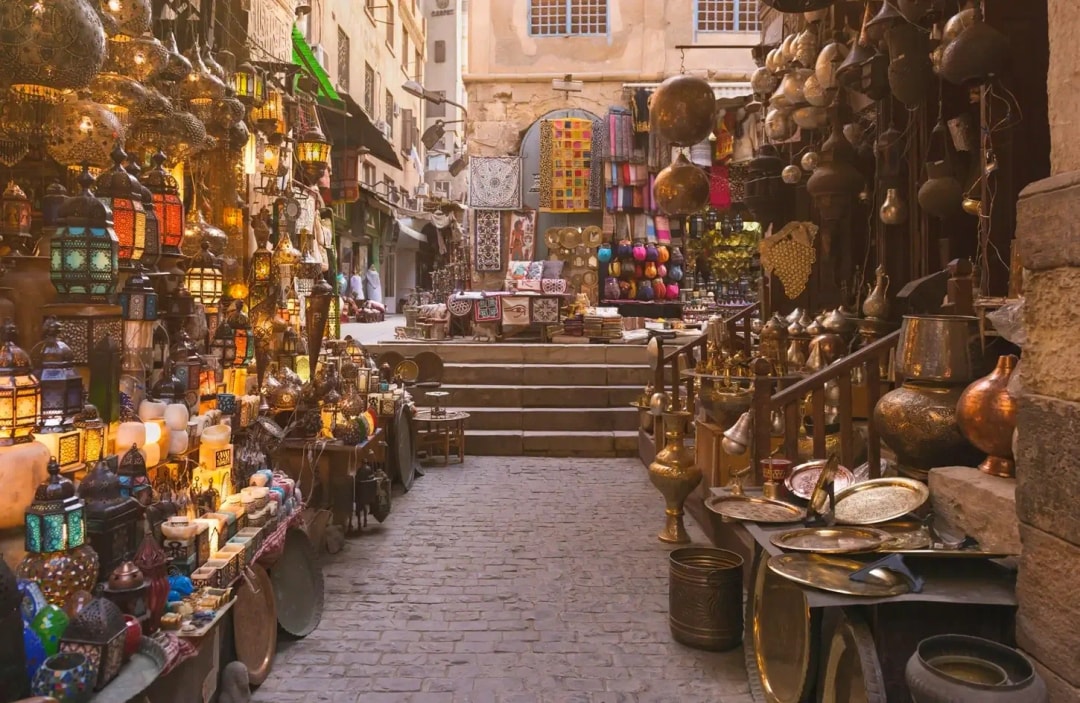
A short drive away is the Mosque of Ibn Tulun, one of the oldest mosques in Cairo, with the Gayer-Anderson Museum, a pair of restored historic houses, beside it. Al-Azhar Park, laid out on a former garbage mound, offers gardens and views back toward the Citadel. Many days end with an evening in Khan el-Khalili and a walk along al-Muizz Street.
No. Saladin founded the fortress in the twelfth century, but the mosque that dominates it was built by Muhammad Ali in the nineteenth century, more than 600 years later. The Citadel carries Saladin's name because he began it.
On a clear day you can make out the pyramids of Giza on the western horizon. On many days haze and dust hide them, so treat it as a bonus rather than a promise.
Yes, for the mosques. Cover your shoulders and knees, remove your shoes at the door, and women should carry a scarf for their hair. The rest of the Citadel has no special rules.
A fair amount, across open courtyards and some uneven ground, but distances are moderate and there are places to rest. Visitors with limited mobility can see the main mosques with some help.
Yes. Children usually enjoy the walls, the views and the military museum, and there is space to move around outside the mosques.
The Citadel of Saladin is the natural anchor for a day in Islamic Cairo, setting the scene for the mosques, markets and medieval streets that spread out below it.