Aswan · Egypt
Aswan High Dam
Continue your trip
Tour Operator · Egypt, Jordan, UAE, Turkey and Morocco
Aswan · Egypt
Continue your trip
TALK TO A REAL LOCAL EXPERT
Book a free 30-minute consultation with one of our Egypt specialists. We’ll talk through your ideas, answer your questions and help you plan the perfect trip.
“We are here, plan your Egypt journey with people who know it best.”
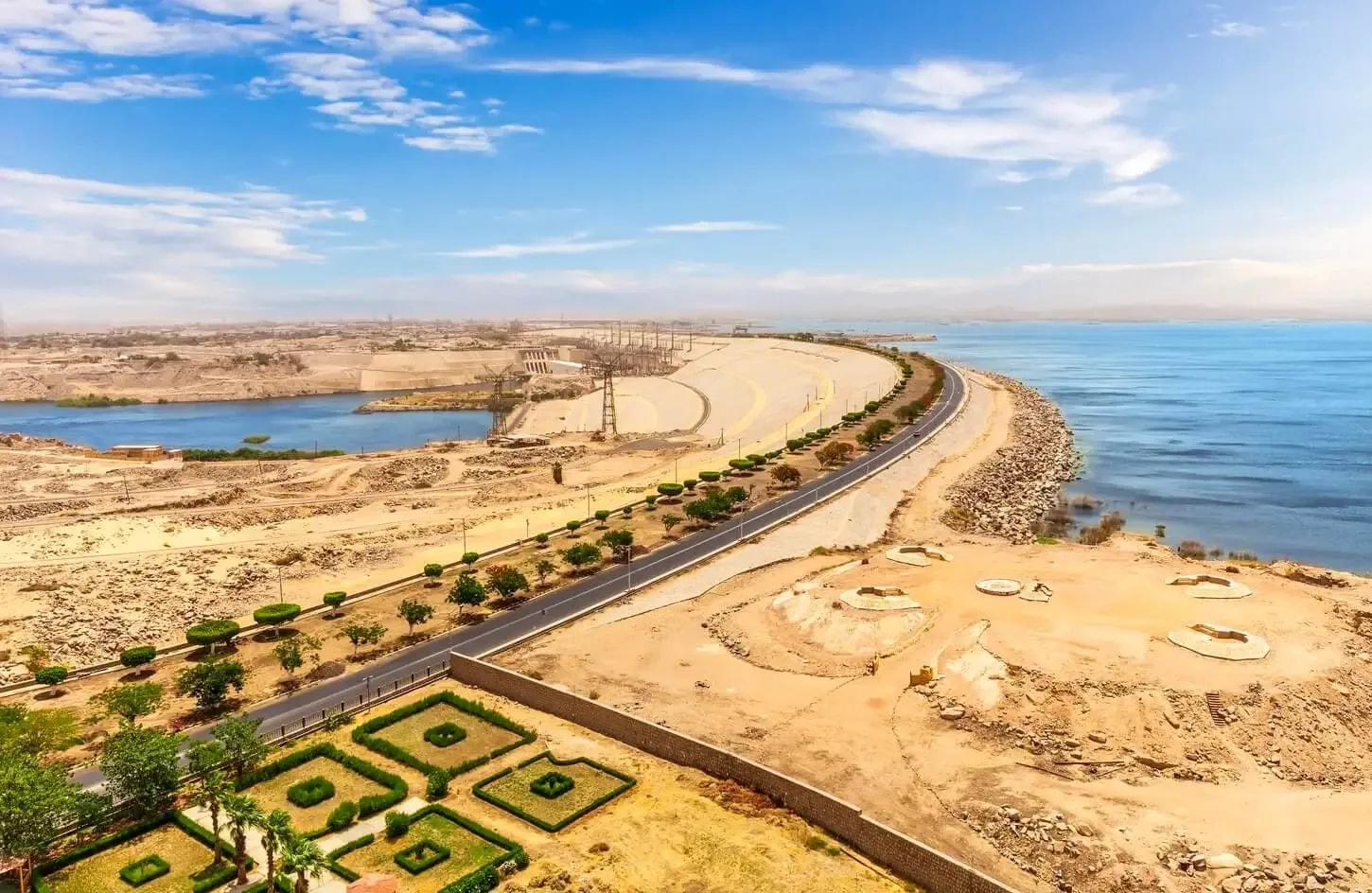
The Aswan High Dam is the vast rock-fill dam across the Nile just south of Aswan, completed in 1970 and one of the defining engineering projects of modern Egypt. It holds back Lake Nasser, the huge reservoir that stretches south for hundreds of kilometers toward and across the border with Sudan, and it changed the life of the river profoundly.
It is a different kind of sight from the temples around it. There are no carved reliefs or painted ceilings, just a broad road across the crest, a monument and a view over two very different stretches of water. But it explains a great deal about the Egypt you travel through. The dam ended the annual Nile flood that had shaped Egyptian life since prehistory, brought electricity to towns and villages, and secured water for farming through dry years. It also forced the relocation of Nubian communities and ancient monuments, including Abu Simbel and Philae.
For many travelers, the High Dam becomes more interesting in hindsight. Once you have stood on it and heard the story, the green fields along the river, the rescued temples and the Nubian villages around Aswan all make more sense.
For thousands of years, Egypt depended on the annual flood. Each summer, rains in the Ethiopian highlands swelled the Nile, which spread over the fields of the valley and left behind fertile silt. A good flood meant a good harvest; a low one could bring famine, and a very high one could destroy villages. Controlling the river was an ancient dream.
An earlier dam, now called the Old Aswan Dam, was built a few kilometers downstream under British administration and completed in 1902. It was raised twice in the following decades, but it could store only part of the flood and could not protect Egypt against a run of bad years. In the 1950s, the government of President Gamal Abdel Nasser decided to build a far larger dam upstream, one that could hold an entire flood and more.
The project became tied up in Cold War politics. When the United States and Britain withdrew their offer of funding in 1956, Nasser nationalized the Suez Canal, saying its revenues would help pay for the dam, a decision that led to the Suez Crisis later that year. The Soviet Union then provided financial and technical support. Construction began in 1960, the dam was completed in 1970, and it was officially inaugurated in 1971, after Nasser's death.
The benefits were large. The dam gave Egypt flood control, a reliable supply of irrigation water through drought years, the ability to grow more than one crop a year on much of its land, and a major source of hydroelectric power. It also had costs. The fertile silt the flood once carried now settles in the lake, so farmers rely on fertilizers, and the coastline of the Nile Delta has been affected by the reduced flow of sediment.
The human cost fell most heavily on the Nubians. Tens of thousands of people were moved from villages along the river that disappeared under the rising lake. In Egypt, many were resettled on new land near Kom Ombo, while in Sudan the town of Wadi Halfa was flooded and its people moved elsewhere. The rising lake also prompted the UNESCO campaign of the 1960s and 1970s, in which dozens of countries helped rescue temples across Nubia.
The building of the High Dam was a source of great national pride in Egypt, and it is still often presented as a symbol of independence and modernization. Thousands of Egyptian workers and engineers labored on it, alongside Soviet specialists, and the project became part of the country's story about itself in the years after the 1952 revolution.
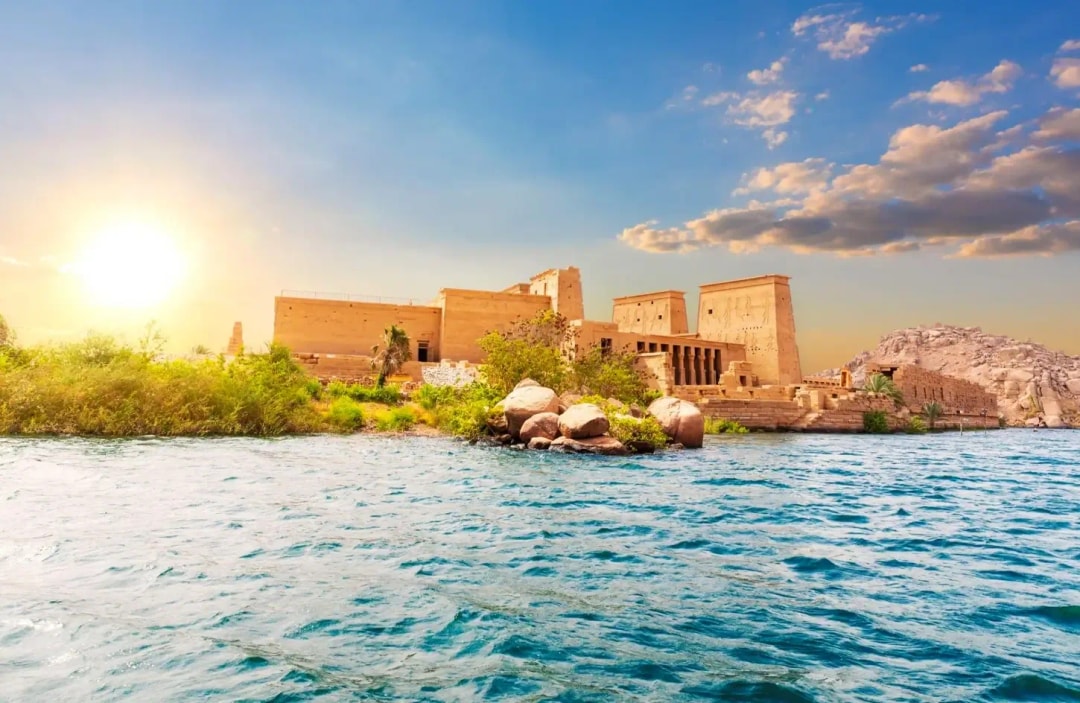
It is also inseparable from the story of Nubia. The lands flooded by the lake held villages, palm groves and centuries of Nubian life, as well as ancient temples and fortresses. The international rescue campaign moved several temples to new sites, including Abu Simbel, Philae and Kalabsha. As a thank you, Egypt gave several smaller temples to countries that helped, which is why the Temple of Dendur is now in New York and the Temple of Debod stands in Madrid. Nubian culture continues in the villages around Aswan and in the Nubian Museum in town, which is a good place to learn about this history.
The High Dam is a short drive south of Aswan, usually 20 to 30 minutes from the city center depending on where you start. It is almost always visited as part of a half-day Aswan tour with a car and guide, combined with Philae Temple and the Unfinished Obelisk. Most Nile cruises that start or end in Aswan include it in their sightseeing program.
If you are taking a Lake Nasser cruise to Abu Simbel, your boat will depart from the lake side of the dam, so you will pass close to it at the start or end of your trip.
The stop itself takes about 30 to 45 minutes, enough to walk along the viewpoint, see the monument and hear the story from your guide. It is rarely crowded for long, as groups come and go quickly.
Visit in the morning or late afternoon if you can. The crest is fully exposed to the sun, with no shade, and midday in summer can be very hot. In winter, mornings can be breezy and cooler than you expect on top of the dam. Because the dam is a strategic site, there are security checks, and the rules on where you can stop and what you can photograph may change. Check current details, including any entry fee, before you go.
If you expect a temple, you may find it plain, but as context it is very valuable. A short stop helps you understand modern Egypt, the end of the Nile flood, Lake Nasser and why Philae and Abu Simbel had to be moved.
The Old Aswan Dam was completed in 1902 a few kilometers downstream and could store only part of the flood. The High Dam, completed in 1970, is much larger and created Lake Nasser, which can hold an entire year's flood and more.
You can usually photograph the views over the lake and the river from the official viewpoints. Photographing security points, soldiers and power installations is not allowed, and rules can change, so follow your guide's advice.
It was built by Egypt with financial and technical support from the Soviet Union. Construction began in 1960 and the dam was completed in 1970, then officially inaugurated in 1971.
Tens of thousands of Nubians had to leave their villages, which were flooded by Lake Nasser. Many were resettled near Kom Ombo in Egypt or elsewhere in Sudan, and Nubian heritage is now kept alive in villages around Aswan and in the Nubian Museum.
The High Dam is a short but useful stop on an Aswan sightseeing day, whether you are staying in town or beginning or ending a Nile cruise there, and it gives the rest of your journey along the river its modern context.